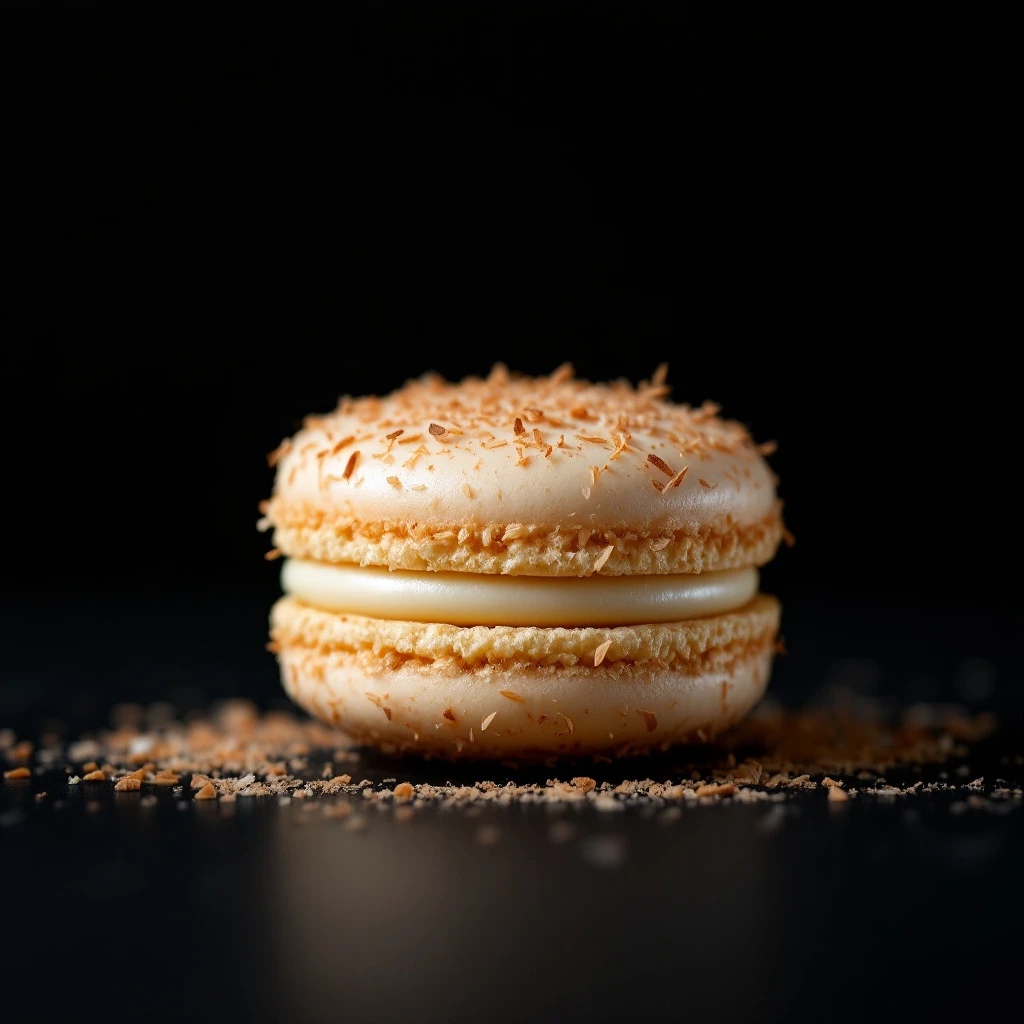
Coconut Macaron
A sun-warmed confection of toasted coconut and delicate almond饼壳, coconut macaron captures the creamy sweetness of tropical shores in an edible aromatic form.
Character
How it smells
Tropical sweetness in edible form.
The coconut macaroon emerged in the 1890s when a French company discovered shredded coconut as a stable baking ingredient.




Origin
Philippines
The macaroon's lineage stretches to ninth-century Sicily, where Arab troops introduced almond-based confections during their establishment of an emirate. Italian monks later refined these treats, adapting the name from maccarone, meaning paste. For centuries, traditional macaroons remained almond-centric until the 1890s, when a French company revolutionized the recipe by introducing shredded coconut as a primary ingredient.
This shift transformed coconut macaroons into the chewy, sweet treats recognized today. When perfumers sought to bottle edible gourmand accords, coconut macaron emerged as a fragrance note, translating the confection's warm, tropical sweetness into an olfactory experience that evokes sun-drenched beaches and bakery warmth.
Wears it best
Fragrances featuring Coconut Macaron
Brands
Brands known for Coconut Macaron
Good to know
Questions, answered
The essentials on Coconut Macaron in perfumery: how it smells, where it comes from, and how it behaves on skin.
What does coconut macaron smell like in fragrance?
Coconut macaron delivers creamy, sweet tropical notes with subtle nutty undertones. It reads as warmer and more edible than fresh coconut, closer to toasted coconut or coconut candy than coconut water.
Is coconut macaron a natural or synthetic note?
It can be either. Natural coconut absolute comes from solvent extraction of dried coconut flesh. Synthetic alternatives like gamma-decalactone replicate the scent profile without fatty undertones.
How long does coconut macaron last in a fragrance?
Coconut macaron typically performs as a heart-to-base note, lasting 4-6 hours depending on concentration. Its moderate tenacity means it lingers well in warmer skin chemistry.
What fragrance families pair well with coconut macaron?
Coconut macaron belongs in gourmand, tropical, and warm oriental compositions. It pairs naturally with vanilla, sandalwood, jasmine, and marine accords for balanced tropical fragrances.
Why do macaroons and macarons share a name despite being different?
Both treats descend from Italian maccarone, meaning paste. French and Italian monks developed the almond version, while coconut was added much later in the 1890s, creating the modern distinction.
What gives coconut its distinctive scent in perfumery?
Gamma-decalactone and delta-decalactone are the primary odorants in coconut. These lactones occur naturally in coconut flesh and are responsible for the creamy, sweet character.
Can coconut macaron work in masculine fragrances?
Yes. Combined with marine notes, woods, or spices, coconut macaron adds warmth and approachability without excessive sweetness, suitable for modern masculine compositions.
Does coconut macaron smell different from coconut oil?
Significantly. Coconut macaron evokes the confection's toasted, sweet character. Coconut oil reads as more fatty, aquatic, and true to the fresh fruit. The macaron note is warmer and more dessert-like.