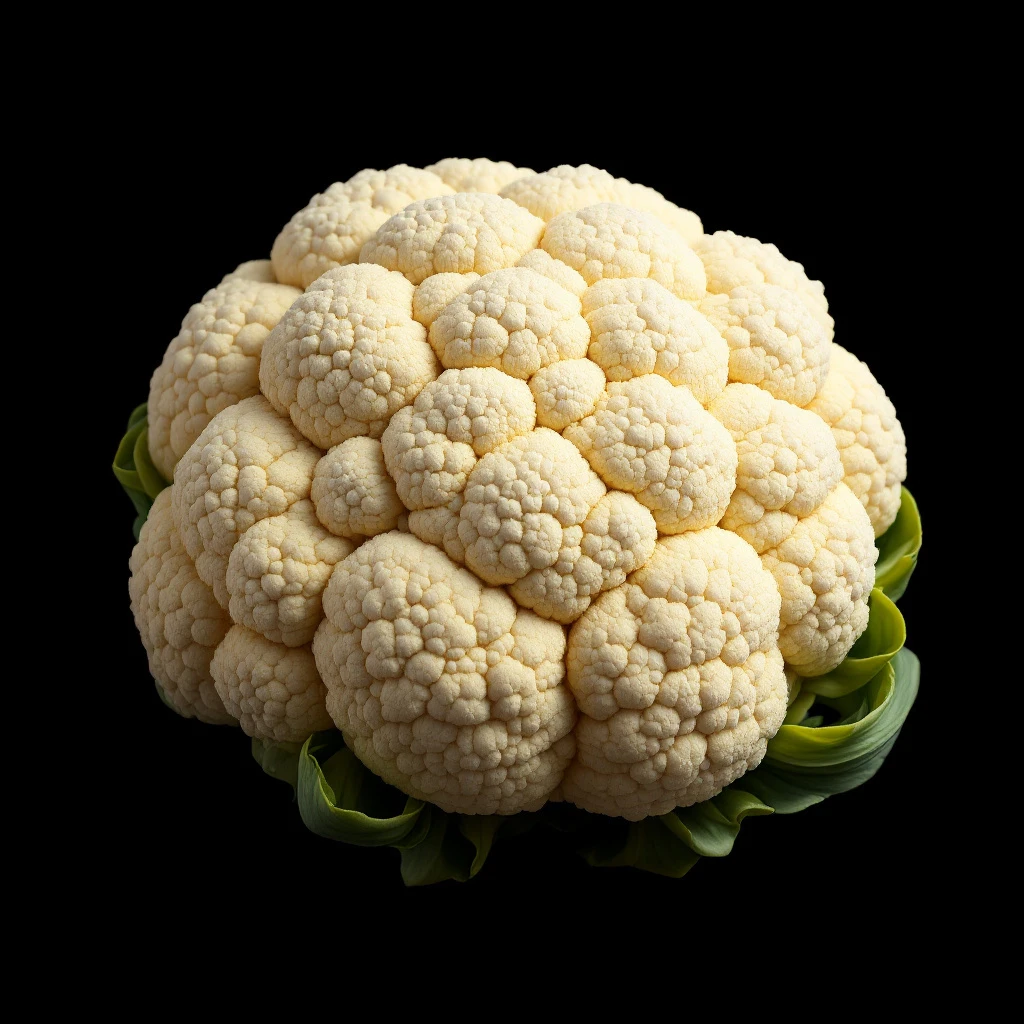
Cauliflower
Cauliflower brings a surprising green, vegetable darkness to fragrances. Its sulfur-laced compounds create unexpected depth in avant-garde compositions, challenging conventions about what perfumery can explore.
Character
How it smells
The unexpected vegetable depths of perfumery
Cauliflower contains the same sulfur compounds found in both garlic and tropical durian, creating an unexpected aromatic connection across food and fragrance.
Pairs beautifully with

Origin
Mediterranean Region
Cauliflower does not appear in classical perfumery traditions. Its journey into fragrance composition began in the late twentieth century as avant-garde perfumers sought unconventional natural materials. The Brassica genus has been valued in food traditions across Mediterranean and Northern European cultures for millennia, with documented cultivation dating to at least the 12th century in Arab gardens.
Modern perfumers discovered its sulfurous green character while researching vegetable-derived materials, finding applications in creating realistic food accords, adding depth to green fragrances, and building unusual atmospheric compositions. Today, select natural perfumers and experimental fragrance houses incorporate cauliflower-derived materials in limited productions.
Wears it best
Fragrances featuring Cauliflower
Brands
Brands known for Cauliflower
Good to know
Questions, answered
The essentials on Cauliflower in perfumery: how it smells, where it comes from, and how it behaves on skin.
What does cauliflower smell like in perfume?
Cauliflower absolute carries a green, vegetable-like aroma with sulfurous undertones. It reads as earthy and slightly bitter, bringing an unusual darkness that works in contrast to lighter green notes.
Is cauliflower a common fragrance ingredient?
No. Cauliflower remains uncommon and appears primarily in avant-garde or niche fragrances. Most perfumers have never worked with it directly.
How do perfumers source cauliflower for fragrance use?
Specialty suppliers offer small quantities of cauliflower absolute or CO2 extract, typically produced from fresh material in limited batches rather than commercial-scale production.
What fragrance families use cauliflower notes?
Cauliflower appears most often in experimental green fragrances and conceptual compositions. It works alongside other unusual vegetable materials to build realistic food-inspired accords.
Does cauliflower add any specific character to fragrance compositions?
Its sulfur compounds introduce a subtle animalic undertone and add depth that distinguishes compositions from more conventional green fragrances featuring cucumber or grass notes.
What compounds give cauliflower its distinctive fragrance?
Isothiocyanates and various sulfur-containing molecules create cauliflower characteristic aroma. These same chemical families appear in related Brassica vegetables like broccoli and cabbage.
Can I find commercial fragrances listing cauliflower as an ingredient?
Very few mainstream products list cauliflower. Smaller independent houses working with unusual natural materials are more likely to incorporate it in conceptual releases.
Is cauliflower considered a natural or synthetic fragrance material?
Cauliflower absolute derives from plant material, making it a natural ingredient. However, its volatile compounds can be replicated through aroma chemistry when natural sourcing proves impractical.