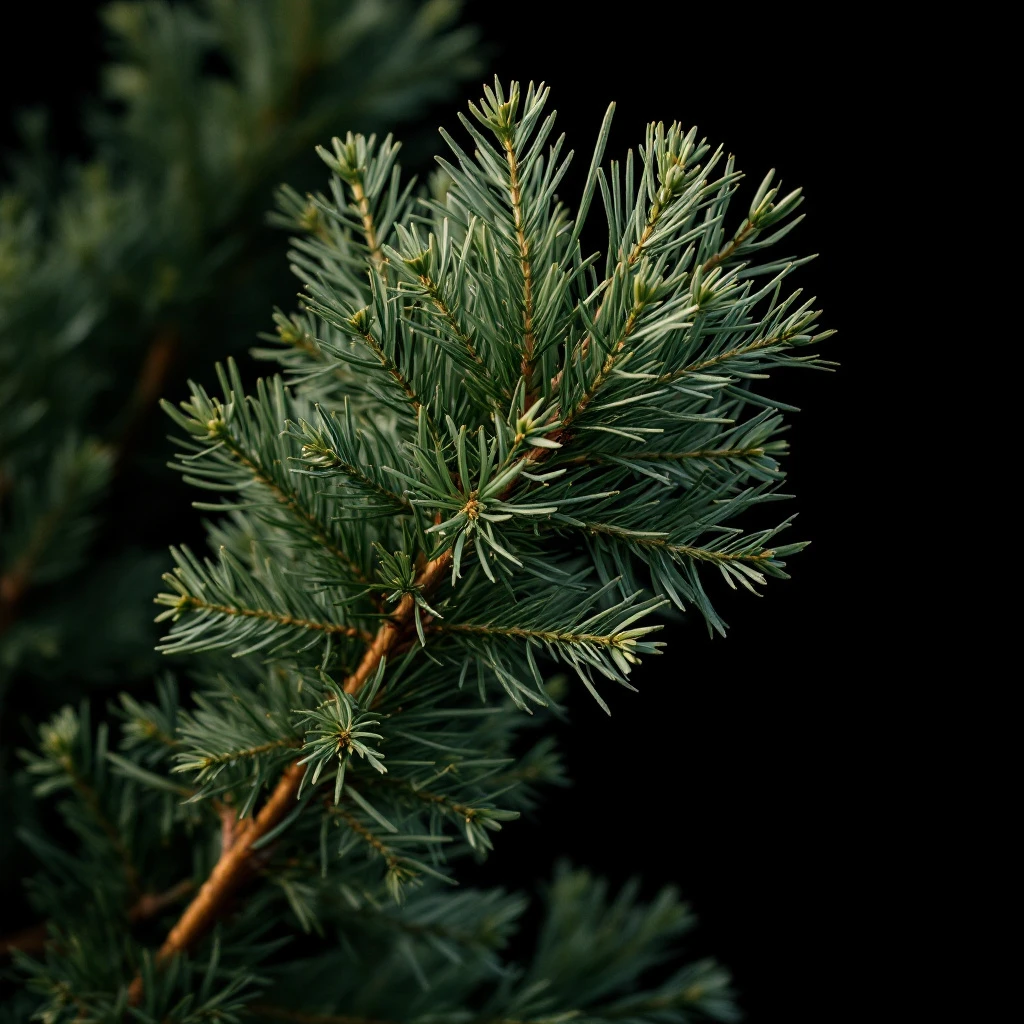
Arizona Cypress
Arizona Cypress brings the rugged beauty of the American Southwest into perfumery. Its essential oil captures the crisp, coniferous spirit of high desert skies and pine-covered canyons.
Character
How it smells
Crisp, coniferous, and unmistakably American.
Unlike its Mediterranean cousin, Arizona Cypress evolved in North America and was classified as a distinct species only in the 20th century.




Origin
United States
Cupressus arizonica holds a unique position in perfumery as one of the few North American conifers to gain recognition in fine fragrance. The species was first formally described by botanist Edward Lee Greene in 1882, though indigenous peoples of the Southwest had long valued the tree for medicinal and ceremonial purposes. Apache and other tribes used various parts of the cypress in purification rituals and traditional medicine, recognizing the plant's aromatic and protective qualities.
The tree's cultural significance extended to Hispanic communities in the region, where it became associated with protection and endurance. During the early 20th century, as perfumers began exploring North American botanical materials, Arizona Cypress oil emerged as a distinctive alternative to traditional European and Mediterranean ingredients, carving out its own niche in the aromatic traditions of fine perfumery.
Wears it best
Fragrances featuring Arizona Cypress

Good to know
Questions, answered
The essentials on Arizona Cypress in perfumery: how it smells, where it comes from, and how it behaves on skin.
What does Arizona Cypress smell like?
Arizona Cypress oil smells fresh, coniferous, and slightly camphoraceous with subtle citrus and woody undertones. It captures the crisp, clean character of high desert air mixed with the resinous depth of pine forests.
Is Arizona Cypress the same as regular cypress?
No, Arizona Cypress (Cupressus arizonica) is a distinct North American species separate from Mediterranean Cypress (Cupressus sempervirens). While both share a coniferous character, Arizona Cypress offers a slightly different aromatic profile with more pronounced camphor notes.
How is Arizona Cypress oil produced?
Arizona Cypress oil is produced via steam distillation of foliage and young branches. The plant material undergoes distillation shortly after harvest to preserve volatile aromatic compounds, yielding a pale yellow to amber oil typically extracted during warmer months.
Where does Arizona Cypress grow?
Arizona Cypress is native to the southwestern United States and northern Mexico. It thrives in arid mountain environments at elevations between 4,000 and 8,000 feet, particularly in Arizona, New Mexico, and Texas.
When was Arizona Cypress formally classified?
Arizona Cypress was formally described by Edward Lee Greene in 1882. Despite this relatively recent scientific classification, indigenous peoples of the Southwest had used the tree for centuries in traditional medicine and ceremonies.
What fraying types commonly feature Arizona Cypress?
Arizona Cypress appears primarily in masculine fragrances and aromatic blends. Perfumers pair it with other coniferous materials, citrus notes, or aromatic herbs to enhance its fresh, outdoors character.
Can Arizona Cypress be used in natural perfumery?
Yes, Arizona Cypress oil is a popular choice in natural and botanical perfumery. It offers perfumers a distinctive North American conifer option that adds authenticity to wilderness and forest-inspired compositions.
What are the key characteristics of Arizona Cypress oil?
Arizona Cypress oil is characterized by its fresh, coniferous aroma with camphoraceous, citrus, and woody undertones. It appears pale yellow to amber and blends well with other coniferous and citrus materials.