Almond Ice Cream
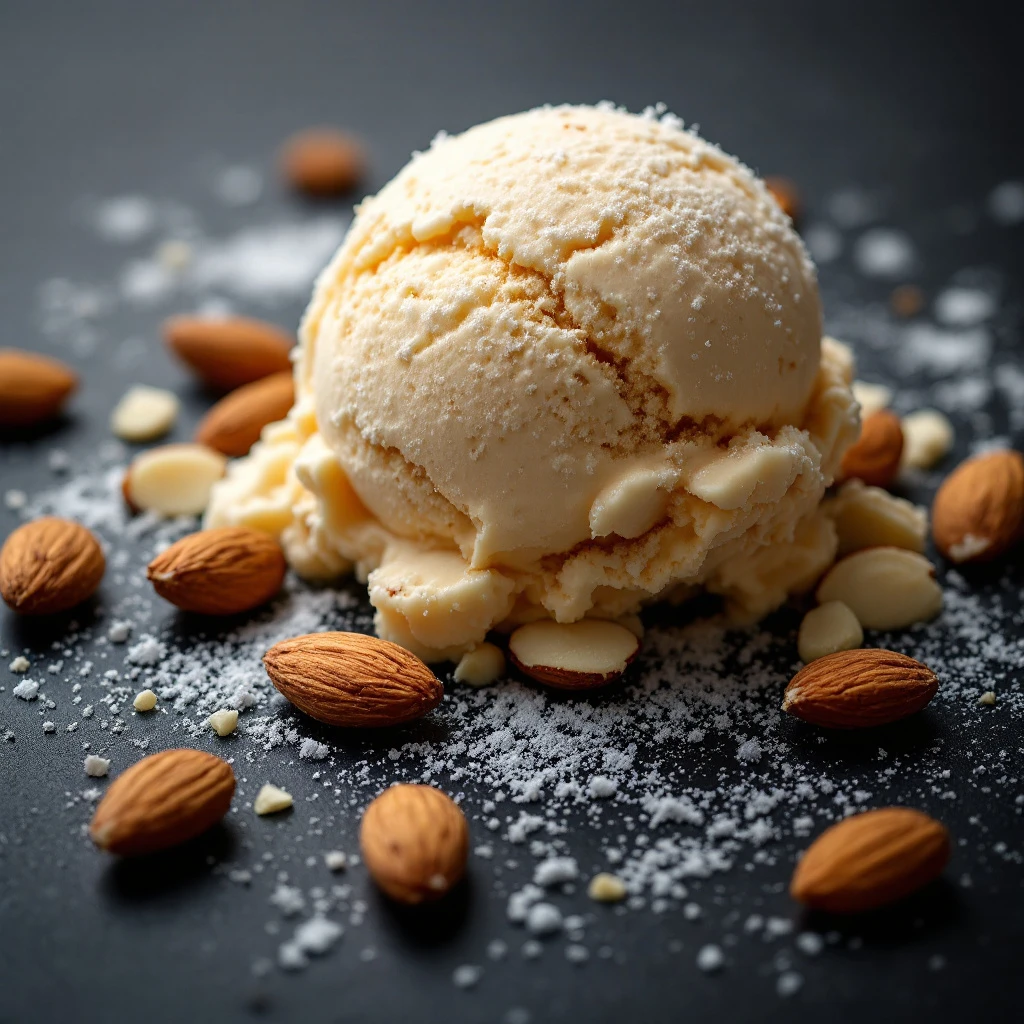
A creamy, confectionery interpretation of the almond note, tempered by a frozen sweetness. Cold, soft, and inviting, it blends the nutty warmth of benzaldehyde with the velvety richness of tonka and heliotrope for a dessert-forward scent that lingers like the last spoonful of a bowl gone soft at the edges.
Character
How it smells
Cold comfort. Sweet surrender. Nutty warmth.
Bitter almonds contain up to 8% amygdalin, a compound that releases hydrogen cyanide when processed, making their oil too toxic for direct use. Perfumers rely on apricot kernel oil instead.





Origin
Iran
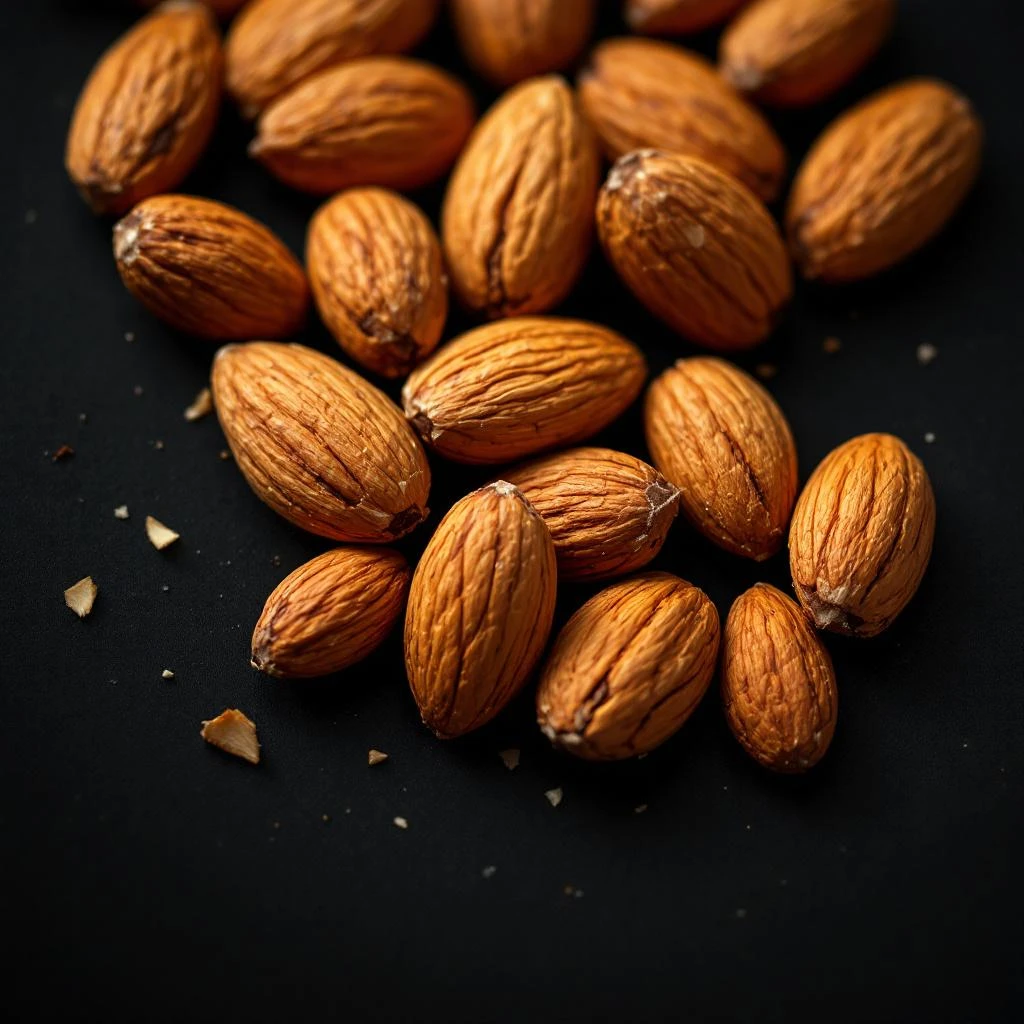
Almonds grow native across the Middle East and Mediterranean, where ancient cultures prized them for both food and fragrance. Egyptians buried almonds with pharaohs. Greeks associated almonds with fertility goddesses.
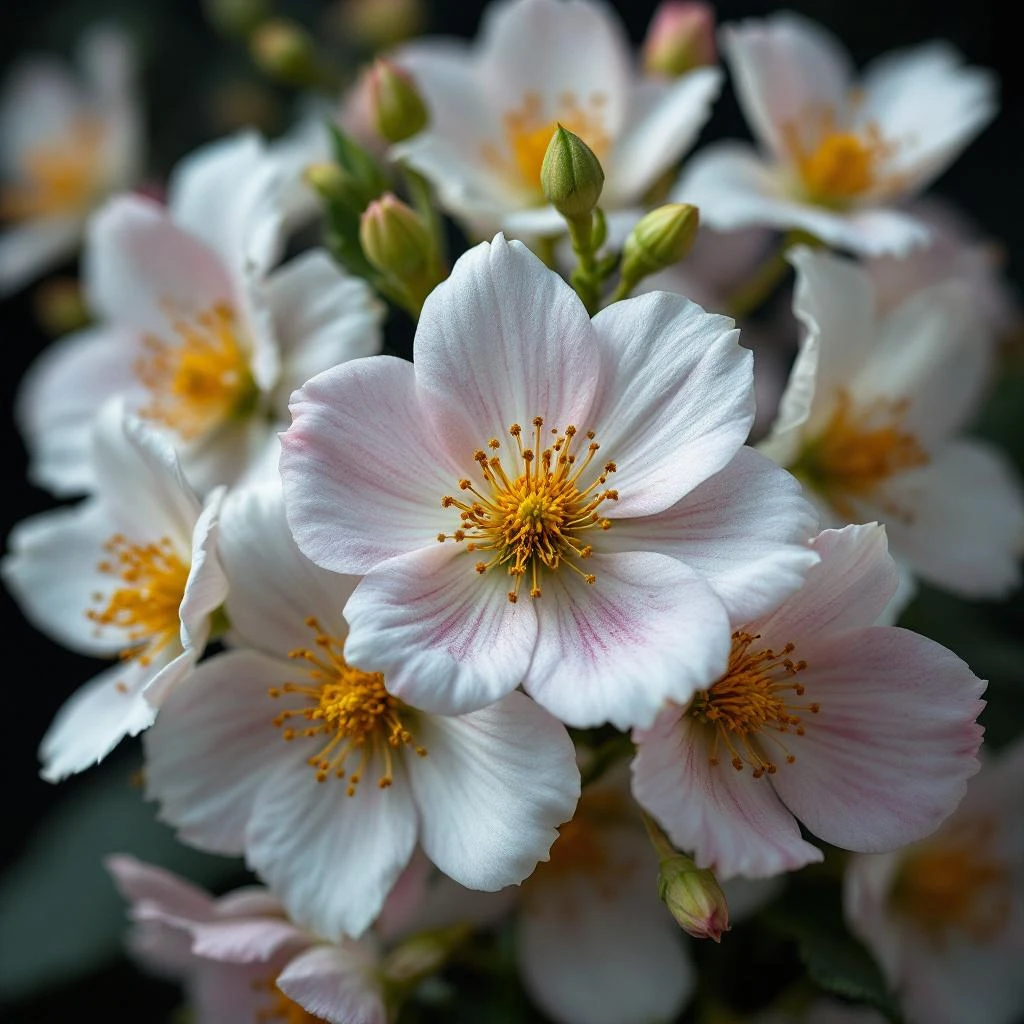
The nuts traveled along Silk Road trade routes into China and Europe, appearing in perfumed waters and pomanders by the medieval period. By the 1860s, scientists studying heliotrope flowers discovered that recreating their scent required benzaldehyde, the same compound found in bitter almond oil. This breakthrough launched synthetic aromatics in perfumery.
The marriage of almond's nostalgic, edible quality with cold, creamy textures emerged in the late 20th century as food-inspired fragrance gained artistic credibility. Today, the almond ice cream note represents comfort, memory, and the fine art of smelling delicious.
Wears it best
Fragrances featuring Almond Ice Cream
Brands
Brands known for Almond Ice Cream
Good to know
Questions, answered
The essentials on Almond Ice Cream in perfumery: how it smells, where it comes from, and how it behaves on skin.
What does almond smell like in perfume?
Almond in perfume is primarily bitter-sweet, featuring the sharp, cherry-like scent of benzaldehyde backed by warm, edible notes from tonka and heliotrope. It reads as nutty, creamy, and slightly medicinal at its core.
Is almond a natural or synthetic perfume ingredient?
Both. Natural almond oil comes from apricot or bitter almond kernels via cold pressing and steam distillation. Synthetic benzaldehyde replicates the same aromatic compound at scale, ensuring safety since bitter almonds contain toxic hydrogen cyanide precursors.
What family does almond belong to?
Almond sits within the gourmand and oriental families. Its edible warmth pairs with vanilla, caramel, and tonka, while its bitter facet grounds floral and powdery compositions without overpowering them.
What gives almond its characteristic scent?
Benzaldehyde drives the characteristic bitter almond aroma. Coumarin from tonka bean adds sweet, vanilla-like depth, and heliotropin provides a faint cherry-almond powderiness that rounds the note into something creamy.
Does almond work in all fragrance concentrations?
Almond adapts across concentrations. In light florals it appears as a whisper of warmth in the dry down. In orientals and gourmands it anchors the base with a lingering, edible richness that strengthens as the scent develops.
What fragrances feature almond prominently?
Several niche and designer releases place almond at center stage, particularly in the opening and heart stages where its sweet-bitter duality creates immediate appeal before softer base notes arrive.
Is almond safe for skin application?
Processed benzaldehyde and food-grade almond absolute are considered safe for topical use in trace concentrations. Bitter almond oil in its raw form is restricted in cosmetics due to cyanide content. Always check IFRA compliance for finished formulations.
What scents pair well with almond in perfumery?
Almond blends seamlessly with vanilla, tonka, heliotrope, iris, and white musks. In warmer compositions it combines with sandalwood and amber. Its versatility makes it equally effective in light, airy florals and deep, resinous orientals.