The Story
Why it exists.
The beginning
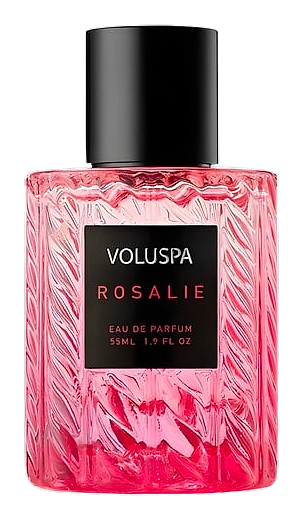
The name reads like a French given name, and the scent leans into that sensibility: classical, feminine, floral, a touch old-fashioned in the best possible way. Rosalie carries the same impulse that defines so much of Voluspa's work, the idea that scent is atmosphere, something you arrange around yourself rather than simply wear. Where many fragrances play in the background of a room, this one follows you out the door. The composition is built around Bulgarian rose, one of perfumery's most storied materials. That ingredient anchors everything else. The fruit lifts it. The pepper gives it a spark. The amber and cedar give it somewhere to land.
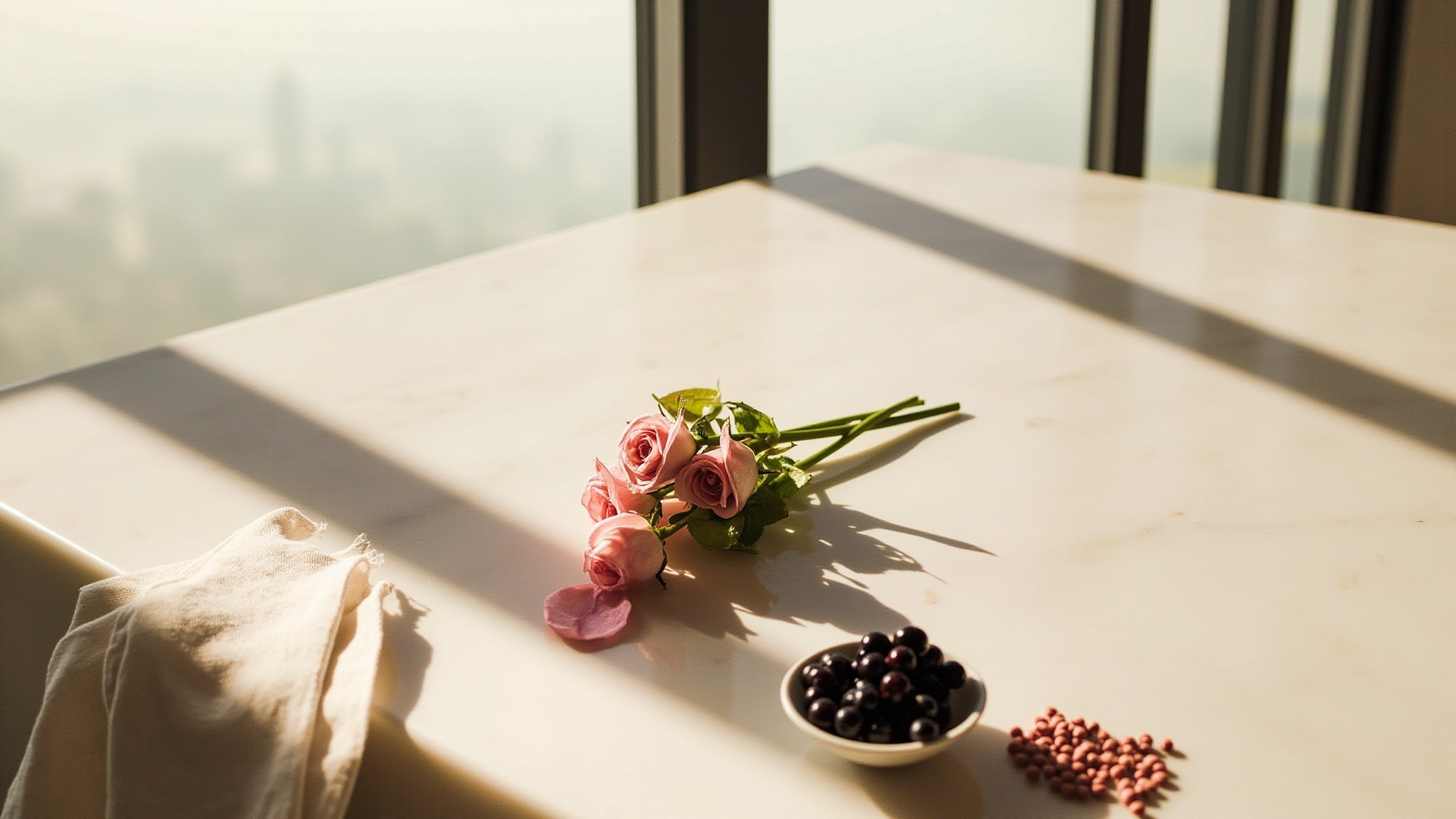
Bulgarian rose is the workhorse here, and it earns its place at the center. What surrounds that rose has real intention behind it. Blackcurrant and pink pepper in the top, doing neither at random. Blackcurrant carries a specific sharpness, a tart-edged depth that lifts rose out of its powdery comfort zone. Pink pepper adds the same kind of lift, a soft burn that keeps things from collapsing into sweetness. Orris root, the heart's quiet anchor, brings a powdery cool that makes the rose read expensive rather than heavy.
The evolution
The first five minutes belong to blackcurrant. Sharp, almost wine-like, with the pepper flickering underneath like static. The rose doesn't rush. It arrives around the ten-minute mark, sweet but tempered by that orris cool, and the raspberry threads through it like jam on a spoon. This is the loudest the fragrance gets, and it never really shouts. After about two hours the fruit recedes. The rose takes over fully, rounder now, the orris giving it a soft-focus quality. The pepper stays, barely, a warmth at the edges. By hour five or six, what's left is amber and cedar with a ghost of rose still detectable if you press your nose to your wrist. Close. Warm. The kind of scent someone catches when they lean in, not across the table. Moderate sillage means it stays yours. On clothes, it lasts into the next morning, softer, quieter, more skin-like than it started.
Cultural impact
Rosalie doesn't try to reinvent the rose. It sits comfortably within a long tradition of floral fragrances that treat the flower as the main event, and it does so without apology. What it brings to that tradition is a particular clarity, a willingness to let the rose speak without burying it under supporting notes. The result reads as confident rather than derivative. It's the kind of fragrance that earns recognition on its own terms. A few wearers have noted its resemblance to other florals in the broader market, but the execution here has its own fingerprint.