The Story
Why it exists.
The beginning
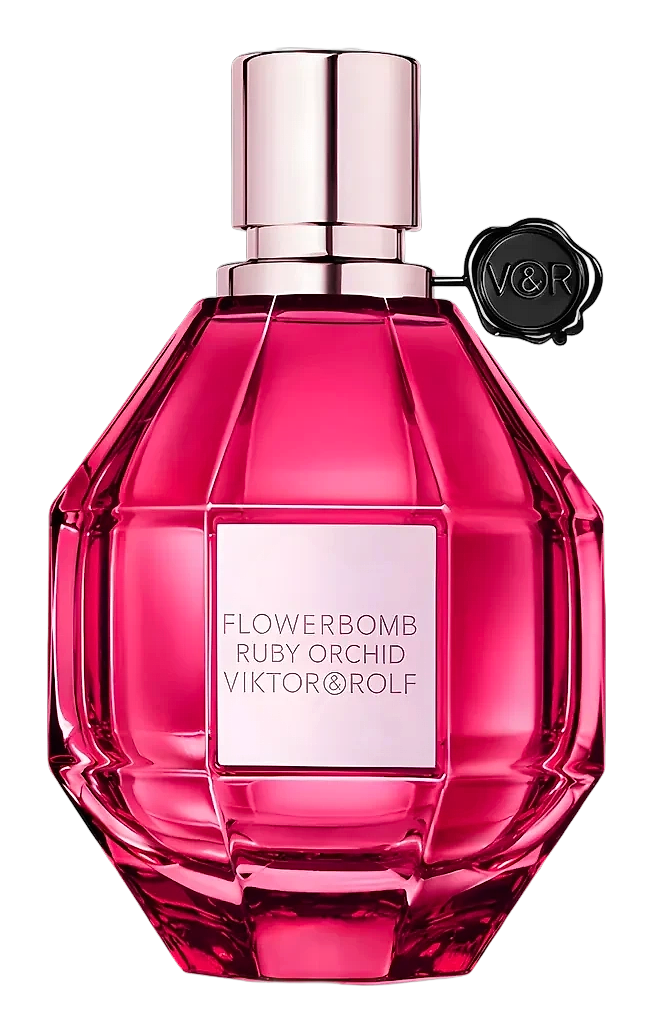
Viktor Horsting and Rolf Snoeren spent the early 2000s building a fashion language built on spectacle and subversion, eventually extending their conceptual eye toward fragrance. Flowerbomb was an early statement piece in that extension, a scent built around abundance rather than restraint, and the Eau de Toilette followed in 2007. The brief went to a trio of perfumers: Olivier Polge, Carlos Benaim, and Domitille Michalon Bertier, each contributing to a composition that stacks citrus, florals, and woods into something denser than the typical floral. The opening hits with orange and mandarin orange lifted by pink pepper, a citrus-spice blend that fizzes rather than whispers.
What makes the composition hold attention is how its layers behave once you stop dissecting them and just wear it. Orange and mandarin orange give the opening a juicy sweetness that catches you before the pink pepper adds its fizzy lift, a combination most florals in the same lane skip entirely. The heart stacks rose, jasmine, freesia, and osmanthus, a quartet that could read soap-bar safe in lesser hands, but the osmanthus brings its apricot-leather undertone that keeps the bouquet from collapsing into one-note pretty.
The evolution
The first five minutes are a bright fizz. Orange and mandarin hit first, almost effervescent, with pink pepper threading through like static. It reads juicy and fizzy, more like a cocktail than a perfume. Around the twenty-minute mark the florals take over. Rose arrives first, then jasmine folds in alongside it, and freesia softens the edges so the bouquet never turns sharp. There's a quiet fruitiness underneath, osmanthus doing its apricot thing, that keeps everything from feeling like a funeral arrangement. By hour two the base has settled in. Cashmere wood gives the whole thing a brushed-suede texture, patchouli grounds it without dirtiness, and amber warms the close. The sweetness softens over the next few hours but never disappears. It sits close to skin by hour six, still traceable at eight, and the next morning the pillow carries a faint, powdery echo that reads more like memory than perfume.
Cultural impact
Flowerbomb became one of the most recognizable objects in modern perfumery, the rare design that signals the scent before anyone smells it. The grenade bottle reads as art object and fragrance vessel in the same glance, which is part of why it has stayed on vanities and in ads for nearly two decades. Wearers tend to be people who want their florals to show up, to be asked about, to leave a trace in a room that empties after they leave.