The Story
Why it exists.
The beginning
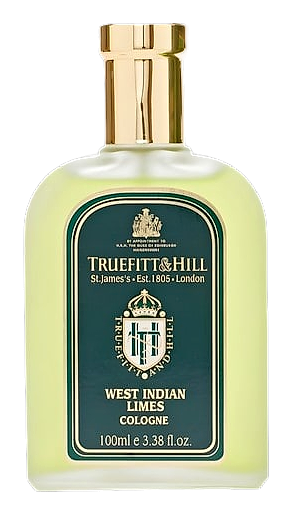
1876. Queen Victoria on the throne. Empire at its peak. Somewhere in London, Truefitt & Hill, already seventy-one years into its barbershop business, decides the gentleman's toiletries collection needs a citrus statement. West Indian Limes. Named for the fruit itself, not some poetic abstraction. The West Indies were the source of the most prized limes in the British empire, available to a house that had been outfitting gentlemen since before the Napoleonic wars. The formula is unapologetically citrus-forward: lime, lemon, bergamot, orange, then a heart of lilac, rose, and orange blossom, anchored by oakmoss. It smells like what it is: a proper cologne from a proper barbershop, made for a gentleman who knows what he wants.
What makes this formula interesting is its structure, a sharp citrus opening that gives way to something softer, then settles into green earthiness. The combination of lime with lilac and rose is unusual in modern perfumery, where citrus typically functions as a brief top note before moving into heavier territory. Here, the florals shadow the citrus rather than replacing it. Oakmoss at the base gives weight without heaviness, a green, slightly medicinal earthiness that prevents the whole thing from feeling like a room spray. It's the kind of composition that rewards attention: first you get the lime, then you notice the lilac, then the oakmoss. Three movements in a very short composition.
The evolution
On skin, West Indian Limes announces itself immediately, a sharp, clean burst of citrus that could cut through London fog. The lime dominates the opening, supported by the bright notes of bergamot and lemon. Within minutes, the heart emerges: lilac and rose appear, softening the citrus without diluting it. The orange blossom adds a quiet sweetness that lingers in the background. This transition is graceful, the floral notes don't fight the citrus; they shadow it. Over the next 3-4 hours, the oakmoss base becomes the star. It adds an earthy, green dimension that gives the fragrance weight. The florals fade first, leaving just the citrus and oakmoss, and eventually even that settles into a quiet, clean skin scent. On fabric, the citrus hangs longer, you'll still catch lime on a tie worn all day. On skin, it becomes intimate by the second hour, close enough that only the wearer notices. By evening, it's a memory, which is exactly the point.
Cultural impact
West Indian Limes occupies a specific corner of the fragrance world: the gentleman who inherited his father's toiletries case, who knows that Truefitt & Hill has been making this exact cologne since before his grandfather was born. It's not exciting in the way a niche release is exciting. It's not challenging in the way a modern artistic fragrance is challenging. It's simply there, reliable, recognizable, appropriate. The 1876 launch date places it firmly in the Victorian era, when a gentleman's toiletries were as carefully selected as his wardrobe. That continuity is the point. For those who appreciate it, this fragrance is not just a scent but a connection to a tradition of masculine grooming that no longer exists in most of the world.