The Story
Why it exists.
The beginning
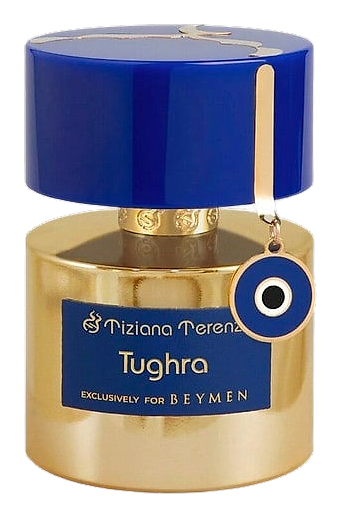
Tughra takes its name from the calligraphic seal Ottoman sultans used to authorize documents, a mark of absolute authority. Paolo Terenzi built this fragrance as a wearable assertion of that same principle: bold, unmistakable, lasting. It's designed for someone who understands that presence isn't about volume, it's about the ability to leave a mark that outlasts the moment.
The composition's foundation rests on a collision of sacred resins and rare ouds that rarely share a bottle. African frankincense and Ethiopian myrrh bring a smokiness that reads as smoke from a distance, not up close, warm, enveloping, without aggression. Then the oud enters. Three varieties, Cambodian, Laotian, Indian, each contributing a different facet of that dark, animalic depth. The saffron doesn't sweeten this. It sharpens it, adding a warm-spice edge that prevents the oud from becoming one-note. What results is a fragrance that refuses to simplify itself.
The evolution
The opening spreads wide and immediately signals intent. Myrrh and olibanum create a smoky, resinous foundation that doesn't retreat. Within the first hour, the oud emerges, the Laotian and Cambodian varieties bringing a leathery, slightly animalic depth that deepens the complexity. The saffron threads through, adding a warm spice that keeps the heart from becoming heavy. By the second hour, the drydown settles into something quieter but no less present: vetiver, patchouli, and a lingering trace of frankincense that stays close to the skin for hours. The evolution isn't dramatic, it's a slow reveal of layers, each phase revealing something the previous one obscured.
Cultural impact
The tughra is the official emblem of Ottoman sultans, a calligraphic seal combining the ruler's name with Quranic verses and symbolic imagery of sword and cimeter. Paolo Terenzi's 2023 fragrance translates this visual language into scent, marrying sacred resins frankincense and myrrh with maritime ambergris in a composition that bridges historical documentation and artistic expression. The material palette deliberately invokes antiquity: myrrh is among the oldest traded luxury goods, and ambergris carries its own maritime mythology. This olfactory translation of imperial identity draws from the same niche market appetite for culturally saturated fragrances that ask something of their wearers rather than offering passive approval.