
The Story
Why it exists.
The beginning
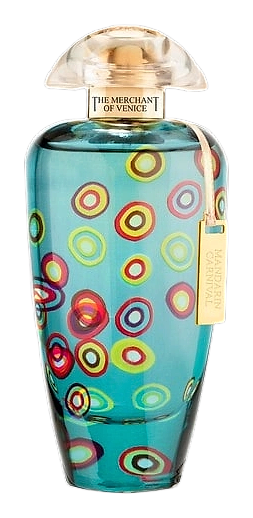
Mandarin Carnival began as an attempt to bottle a feeling: the moment a Sicilian carnival mask lifts to reveal not just a face but an entire landscape, blue sea, green fields, flowers that smell like rain and heat. The Merchant of Venice drew on Venice's centuries of trade with the East, bringing exotic ingredients into conversation with the citrus groves of their homeland. Bitter almond anchors the opening with a quiet intensity that few would expect from something so bright. The result is a fragrance that plays in two worlds at once, the known and the mysteriously far away.
What makes Mandarin Carnival interesting is how the tamarind sits in the composition. Unlike straightforward sweet notes, it carries an acidity that cuts through the mandarin's brightness, keeping the opening from becoming merely cheerful. White peach in the heart softens everything, but the aquatic base does the real work, it reframes the sweetness as something cool and watery rather than heavy. Rose and cashmere wood arrive late, adding a powdery softness that makes the drydown feel less like a finish and more like a memory. The tension between sweet and aquatic is where this fragrance lives, and it's a balance most compositions in this category never attempt.
The evolution
The opening hits fast, mandarin and tamarind together, bright and immediate. For about twenty minutes, the citrus crackles like something about to happen. Then the orange blossom arrives, floral and clean, taking over from the tamarind's sweetness. White peach follows, fleshy and warm, and for a while the fragrance feels like something entirely different from what it started as. The aquatic notes arrive quietly, almost as a correction, cooling down the sweetness before it gets too heavy. By the third hour, only the musk and cashmere wood remain, soft, close, intimate. On most skin, the drydown lasts another three to four hours. Some say it lingers on fabric long after the wearer has moved on.
Cultural impact
Mandarin Carnival occupies an interesting space in the citrus-floral-fruity category, not quite mainstream, not quite niche. The tamarind note gives it a distinctiveness that sets it apart from typical summer fragrances, though it hasn't achieved the cult following of some peers in the Murano Collection. Wearers tend to either love the exotic warmth or find it slightly too sweet, but the consensus is that it smells expensive for the price point. The aquatic base has become something of a signature for the brand, present in several other releases, though never quite in the same configuration. It's the kind of fragrance that invites conversation: the sweet and the aquatic, the carnival and the canal.