
The Story
Why it exists.
The beginning
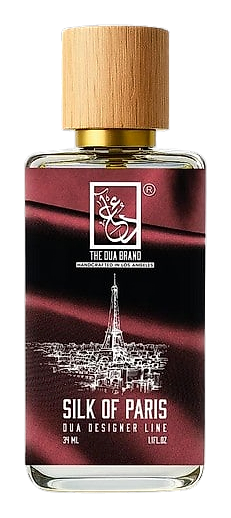
Silk Of Paris arrived in 2024 from Mahsam Raza's bench at The Dua Brand, a house built on reconstructing high-end scent architecture at an approachable cost. The composition borrows its name from the tactile pleasure of fine fabric, and the juice leans into that idea. Bergamot and blackcurrant lead, bright enough to wake a room, then the composition folds inward toward rose wrapped in a silk accord. The drydown is chestnut and cocoa, warm without becoming gourmand. It's a study in how a few well-placed notes can feel more luxurious than a crowded pyramid.
The silk accord is the move worth noticing. This one threads between them by using silk as a structural middle layer, a fabric note that softens the transition from floral to gourmand without turning either phase into a cliché. The chestnut adds an earthy, nutty bridge that keeps the cocoa from going full chocolate bar. The result is a composition that reads warmer than its citrus opening promises, but never crosses into sweetness for sweetness's sake.
The evolution
The first ten minutes are all sparkle, bergamot cutting sharp against the tartness of blackcurrant. That brightness doesn't last, and it shouldn't. Within twenty minutes the rose arrives, not as a single flower but as a fabric, velvety and slightly powdery, threading through whatever the citrus left behind. The silk accord does its quiet work here, bridging floral into something warmer without announcing itself. By the one-hour mark the cocoa and chestnut have taken over, and the scent has shifted from a bright daytime opening to something closer to late afternoon. The cocoa is dry, not sweet, more reminiscent of a high-percentage chocolate than a confection. As the hours pass, the chestnut settles into a quiet warmth, the rose fading first and leaving the nuttier notes to carry the composition toward its close.
Cultural impact
The cocoa-rose pairing places it in a conversation about how gourmand and floral categories can soften their edges. Sweetness here reads as an undertone rather than a headline, giving the composition a composed quality that rewards closer attention. The fragrance invites a different kind of wearing, one where restraint and texture do the talking. It belongs to a wider current of compositions that treat fabric and skin as a starting point for scent, blurring the line between what you wear and how it feels to wear it.