
The Story
Why it exists.
The beginning
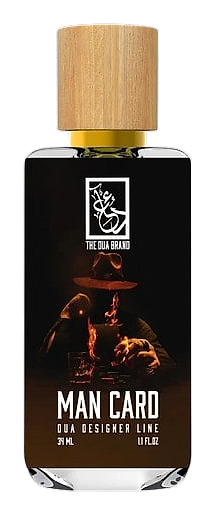
Man Card launched in 2021 from The Dua Brand, a Los Angeles house founded in 2016 that built its catalog on reconstructing well-known scent profiles without the designer markup. This one reaches back further than the brand itself, pulling from Gucci Pour Homme, a 2003 release that earned a quiet following before disappearing from shelves. What made that original worth chasing? A composition that treated masculine fragrance as something other than a citrus shower gel. Heavy papyrus, real leather, incense thick enough to feel architectural. Pour Homme had substance. It also became increasingly hard to find. The Dua Brand's entire approach lives in gaps like this one: a discontinued composition that people still talk about, reconstructed for a generation that never had access the first time around.
The interesting move here is the ingredient list. Twenty-seven notes sounds like a kitchen-sink approach, but the accord breakdown tells a different story. Woody, leather, amber, smoky, and lavender dominate, with iris and powder threading underneath. That's not a fragrance trying to please everyone. That's a composition with a thesis. Papyrus and incense do the structural work most fragrances leave to ambroxan or ISO E Super. The leather accord lands in the heart rather than the base, which changes the entire arc. You smell the material from the first spray instead of waiting for it to emerge.
The evolution
The first ten minutes are all papyrus and bergamot, with a sharp, almost mineral quality that reads like dry paper in sunlight. Lemon cuts through briefly, then the lavender arrives and softens the edges. The heart phase is where this fragrance makes its argument. Leather lands early, around the 20-minute mark, carrying incense and pink pepper with it. It smells less like a jacket and more like a saddlebag left in a warm room. Orris root adds a powdery coolness underneath, keeping the composition from sliding into pure warmth. Sage and geranium flicker in and out. The drydown is where the composition commits. Sandalwood, amber, tonka bean, and vanilla settle into something close and lasting. Oakmoss and vetiver keep it from going too sweet. On skin this phase runs 4-6 hours, gradually pulling closer to the body. What lingers into the next morning is the leather-amber base, faint but identifiable on the wrist if you press your nose there. The papyrus and citrus from the opening are gone by then. What remains is the architecture.
Cultural impact
Man Card sits in an interesting space. It's a reconstruction of a 2003 original that most people under 35 never smelled, aimed at buyers who want designer-level composition without the designer markup or the secondary market markup for a discontinued bottle. The fragrance community that tracks these reconstructions tends to be price-conscious but quality-demanding, people who know what a good composition smells like and don't need the label to confirm it. Within that world, The Dua Brand has built quiet credibility. Not prestige, not buzz, but a working catalog that delivers on its promises. Man Card is a representative piece of that catalog. It doesn't reinvent anything. It demonstrates that the house understands what made the original worth chasing.