
The Story
Why it exists.
The beginning
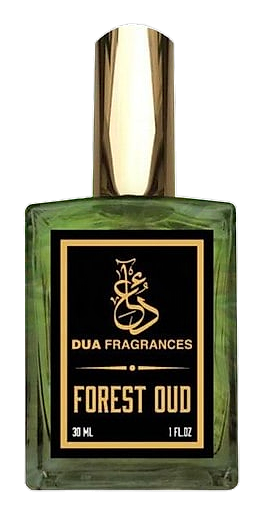
Forest Oud by The Dua Brand takes its name literally, forest, then oud, but the point is the negotiation between them. Perfumer Mahsam Raza built this around the idea of a forest path at the hour the light turns: green and alive at the top, warm and deep in the base. Pine needles and grass establish the canopy and forest floor. Palisander Rosewood bridges the two, carrying the composition into its resinous close. Tunisian amber and Malayan oud provide the warmth that makes you want to stay among the trees a little longer. The name earns its place not by being a literal pine forest, no candle-smoke, no forced evergreen, but by translating that atmosphere into something wearable. The green opening suggests depth and movement. The oud warmth makes it a fragrance for skin, not a concept in a bottle. It's forest as feeling, not forest as scenery. The perfumer understood that the duality is the point. Cool air that warms against you.
Palisander Rosewood is the ingredient that makes this fragrance interesting, and potentially divisive. In perfumery, it's the material that people have strong opinions about: one nose reads it as warm and floral, another reads it as industrial, like pencil shavings or a mechanic's garage. The difference comes down to concentration and what surrounds it. Here, it's placed in the heart where it has room to breathe. The pine and grass open the composition cleanly, giving the rosewood space to emerge without competition. By the time it settles into the oud and amber base, the wood has integrated rather than dominated.
The evolution
The opening announces itself cleanly. Pine needles and grass arrive simultaneously, the smell of a forest after rain, when the air is still and the trees hold moisture. There's an almost sharp quality to the pine, a green bite that wakes you up. Not synthetic or air-freshener sharp. Just alive. Twenty minutes in, the pine softens. The grass lingers, drier now, more seed than stem. This is where Palisander Rosewood begins its quiet takeover, a warm, dry woodiness that shifts the trajectory from canopy to floor. Some noses read it as pencil shavings. Others read it as a dry floral. The fragrance doesn't argue either way. It just settles. By the hour mark, the oud and amber arrive. The handoff matters here: the rosewood has prepped the skin for warmth, so the Malayan oud doesn't shock. It arrives resinous and smooth, backed by Tunisian amber that adds a honeyed sweetness without tipping into gourmand. The conifer DNA is still there, a ghost of pine that threads through the drydown, but it's muted now, a memory rather than a statement.
Cultural impact
Forest Oud appears to have been discontinued, which has only sharpened its appeal among Dua Brand collectors who value the green-to-resinous trajectory. The fragrance attracted a specific kind of wearer: someone who wanted oud warmth without the animalic intensity, combined with a green opening that felt genuine rather than constructed. Early adopters described it as the kind of composition that rewards patience, an initial freshness that gives way to something worth waiting for. The rosewood heart divided opinion in the way only interesting ingredients can, which kept conversation alive even after the fragrance was no longer in production.