The Story
Why it exists.
The beginning
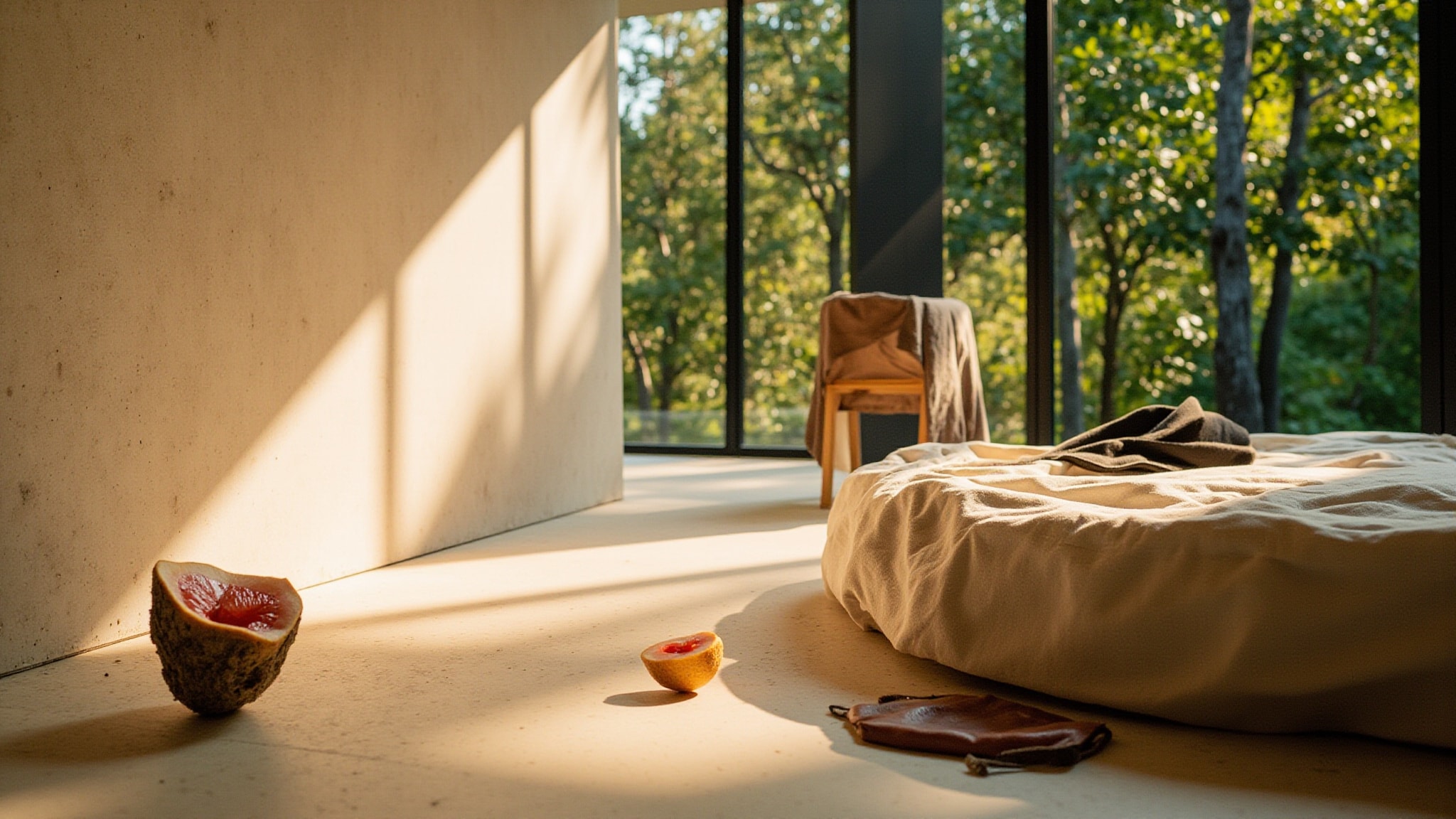
The name says everything: a suggestion of canopy and stillness, of light filtered through leaves, of ground that stays soft underfoot. There's no attempt to recreate a specific place. It's the feeling of one, distilled into something designed to ground rather than announce. The 2024 release leans into what the brand does best: essential oils carried in a skin-nourishing base. This is perfume as grounding ritual, designed for the person who wants scent to settle them in rather than lift them up. The composition strips away excess and lets the botanical materials do the talking. Grapefruit opens with that clean, pithy brightness, followed by the cool resinous lift of Ho Wood, before settling into a base of sandalwood and patchouli that reads more like warmth than perfume.
What's interesting here is what stays out. The carrier base slows everything down, letting each note arrive at its own pace. The grapefruit has room to breathe before the camphor wood steps in. And the base of sandalwood and patchouli has time to settle into something close to second skin rather than sitting on top of it. The composition is built around four essential oils doing the heavy lifting: grapefruit, Ho Wood (the source of that camphor brightness), sandalwood, and patchouli. Minimalist by design, but not simplistic. Each material earns its place.
The evolution
The opening belongs to grapefruit, and it's a clean, slightly bitter grapefruit, not the candy-sweet version. It smells like cutting into the fruit with the skin still on. Then something shifts. The camphor wood arrives, and the whole composition tilts cooler, greener, more medicinal. The air feels different. As the first hour passes, the woods take over completely. Sandalwood comes through creamy and warm, while patchouli grounds everything with that raw, earthy depth. No sweetness lingers. No synthetic warmth tries to convince you it's something it isn't. By hour three or four, the scent has pulled close to skin, almost imperceptible to anyone but the wearer. What remains is a soft, woody warmth that smells less like a fragrance and more like the natural warmth of your own skin after time spent outdoors. The transition between phases feels deliberate.
Cultural impact
Stray Willow's audience tends to be people who treat fragrance as part of a broader self-care practice rather than a statement piece. The roller format positions it somewhere between perfume and aromatherapy, which makes it as at home in a yoga bag as on a vanity. It won't compete with designer houses on sillage or longevity. That's not the point. The point is a scent that feels like it belongs to you, not the room. There's something appealing about a fragrance that asks so little of you. No need to reapply obsessively, no anxiety about whether it's too loud for a crowded room, no second-guessing whether the projection matches the occasion.