
The Story
Why it exists.
The beginning
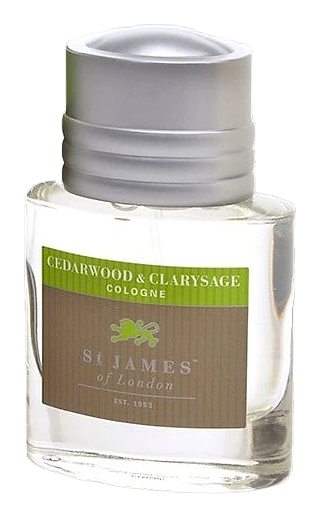
Cedarwood & Clarysage is the composition that started everything for St James of London. Originally formulated in 1953, during a period when Britain was rebuilding and new design language was still forming, the formula lay dormant for decades before being reinstated as the house's signature when the brand relaunched in 2014. The concept is straightforward: Atlas cedar at the rugged core, flanked by a modern hit of black pepper and rounded out with geranium and labdanum. The brand's own framing is direct. The complexity rests on our end. All you notice is an understated classic. That is not false modesty. It is the brief.
What makes this composition worth a second look is the confidence to let a single material do most of the talking. Atlas cedar, specifically, rather than the more common Virginia or Texas cedar used in mass-market woody fragrances. That choice gives the base a drier, more resinous character, with less pencil-shaving sweetness and more of the bark's natural austerity. Clary sage is the second structural pillar, picked for its dry, almost hay-like herbal quality that lifts the wood instead of smothering it. Black pepper arrives as accent, not seasoning, a one-line note that keeps the whole thing from tipping into old-library mustiness.
The evolution
On skin, Cedarwood & Clarysage opens with a quick herbal snap. Clary sage and black pepper arrive together, the sage green and slightly bitter, the pepper adding a clean, dry heat that reads more like cooling mint than culinary spice. The first fifteen minutes feel lighter than the name suggests. By the twenty-minute mark, Atlas cedar takes command. It announces itself not as a lumber-yard note but as something smoother, closer to the smell of a polished banister or a well-kept wooden box. That mid-phase is the heart of the fragrance, and it holds the stage for hours. There is no dramatic shift after that. Geranium surfaces briefly during the second and third hour, adding a faint rosy lift that most people will register as freshness rather than as a discrete note. Labdanum binds underneath throughout, giving the cedar a warm, slightly ambery undertone that keeps the composition from going cold. In the final two hours, the pepper fades entirely, the sage retreats, and what remains is cedar and labdanum in quiet conversation.
Cultural impact
Cedarwood & Clarysage occupies a specific lane: the woody-aromatic fragrance for someone who finds most woody-aromatic fragrances too loud or too sweet. It sits closer to the restrained end of British grooming than to the louder club of niche cedar releases. Wearers tend to be the ones already owning one good fragrance and looking for a second that works harder in professional settings without playing it safe. The house's nine-year release cadence keeps the line slow and considered, which means this composition has had a decade to establish itself without being oversold.