The Story
Why it exists.
The beginning
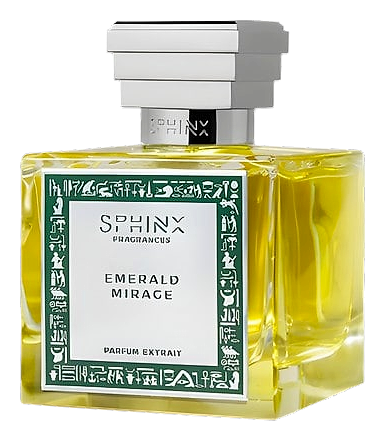
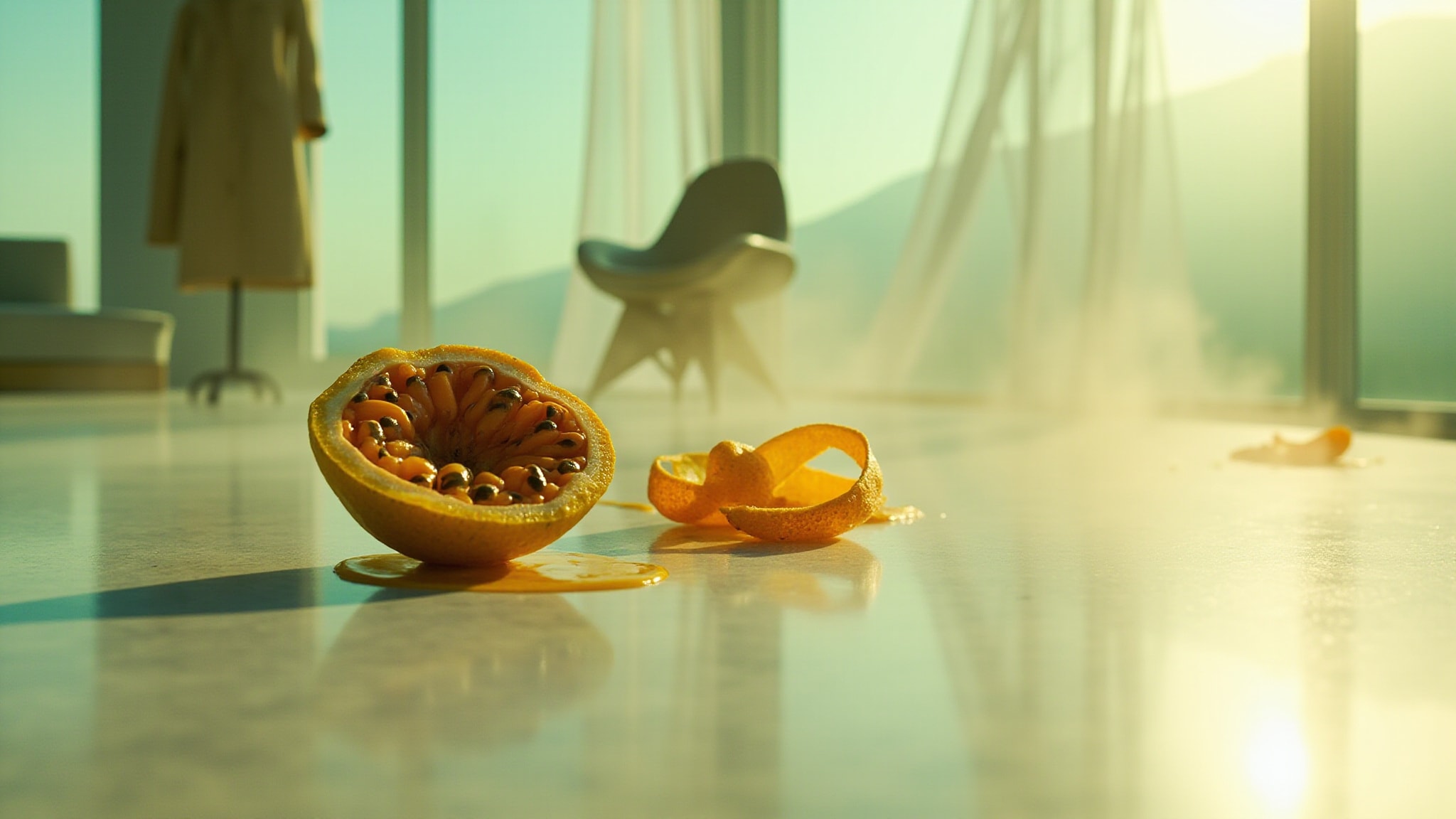
Emerald Mirage began with a question Sphinx keeps returning to: what does a sunrise smell like? Not metaphorically, literally. The brief was to capture that first hour on a tropical coast, when the air is still cool enough to be honest and the light is doing that thing where it turns everything green-gold and impossible. The perfumer started with bergamot, the way the brand always does when it wants clarity at the top. But instead of going mineral or aquatic, the easy choices, the team reached for passionfruit. The sweetness wasn't an accident. It was the whole idea. The name came last: Emerald Mirage, because the coast looks closer than it is, and the scent has that same optical-illusion quality, lush and slightly unreal.
What's unusual here isn't any single note, it's the density of the opening. Eight materials in the top accord, most of them tropical fruits, and they don't fight. They layer. The passionfruit leads but the strawberry follows, and the banana adds a creamy undercurrent that stops it from going sharp. This is the kind of top-end that niche houses usually avoid because it's hard to balance and easy to get wrong. The heart, jasmine, cedar, patchouli, rose, does something clever: it provides contrast without cancelling the warmth. By the time you hit the vanillin and musk base, the fragrance has already done the hard work of earning that sweetness. It's not a dessert scent.
The evolution
The first two minutes are loud. Passionfruit doesn't whisper. Strawberry doesn't wait. Orange and lemon pile on top, and for a moment this smells like a fruit salad someone's shaken up and thrown at a wall. Then, around the five-minute mark, the bergamot resurfaces. It cuts through the sweetness like a door opening onto cooler air. That citrus precision is what keeps the opening from collapsing into pure confection. The heart takes longer than expected to arrive. Jasmine edges in around minute fifteen, green and slightly indolic, and the cedar follows, adding a warmth that the top notes were too busy to provide. Patchouli lingers in the background, present but not loud, doing its usual trick of making everything underneath it feel more grounded. The drydown is where Emerald Mirage earns its name. The vanillin arrives soft, mixing with amber and musk into something that smells less like fragrance and more like skin that's been warm for a while. The sillage tightens.
Cultural impact
Emerald Mirage sits in an interesting corner of the niche market: tropical-forward compositions are still relatively uncommon in the higher-end indie space, where citrus-aquatic and resin-woodsy dominate. What Sphinx has done here is make tropical accessible to someone who doesn't want a soliflore. The synthetic sweetness that some wearers flag is, for others, the exact draw, it smells like a specific moment, a specific warmth, a specific kind of nostalgia that neither citrus nor floral alone can manufacture. The brand's positioning as a bridge between ancient ritual and modern ease gives this fragrance a context: it's not trying to be a luxury statement. It's trying to be a good morning.