
The Story
Why it exists.
The beginning
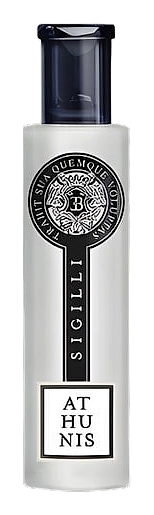
Athunis takes its name from the Etruscan god of beauty. The choice is deliberate: Enrico Buccella was not simply composing a woody fragrance. He was interpreting an idea. What does beauty smell like? The answer arrived in 2010 as a composition that refuses comfort. Vetiver, cedar, and musk, materials as old as perfumery itself, assembled with a restraint that borders on severity. The vetiver carries mineral darkness and a hint of charred earth, the cedar delivers dry shavings that recall a craftsman's workshop, and the musk anchors everything with a quiet animalic warmth that never announces itself. Each material remains distinct yet interdependent, refusing to blend into pleasant anonymity. Athunis does not seduce. It reveals.
The note structure is deceptively sparse: cedar at the opening, vetiver carrying the heart, woody notes and musk anchoring the base. Three tiers, four materials. But sparsity is not simplicity. Cedarwood in fragrance carries a waxy, pencil-shaving warmth when composed gently, here, Buccella leans into its sharper, more astringent character. The vetiver is not the green, citrus-laced variety found in sunny compositions. This is the root after it has dried, after it has absorbed soil and stone and time. The musk does not sweeten. It whispers.
The evolution
The opening hits dry and immediate, cedar that smells like the shavings, not the tree. There is no gradual reveal here. Vetiver announces itself within minutes, dark and mineral, carrying the ghost of smoky char that reviewers consistently compare to bonfire remnants. The cedar loops back through the heart, reinforcing the woody architecture while the vetiver deepens, becoming almost salty. On skin, the longevity is above average, with moderate sillage that does not fill a room but will remind anyone standing close that you are wearing something serious. The mineral quality intensifies as the hours pass, the smoke threading through the composition rather than dissipating. The drydown is quieter: musk settling into the warmth left behind, the smoke thinning but never fully disappearing. It lingers like the memory of a fire long after the flames have gone.
Cultural impact
Athunis occupies a specific corner of niche masculine fragrance: the dry, smoky vetiver territory that pushes further into austerity. Its power comes through subtraction rather than intensity. The fragrance attracts wearers who want wood without warmth, smoke without sweetness, and a masculinity that does not announce itself. It appeals to those who find strength in restraint, who prefer a composition that reveals its complexity gradually rather than assaulting the senses all at once.