
The Story
Why it exists.
The beginning
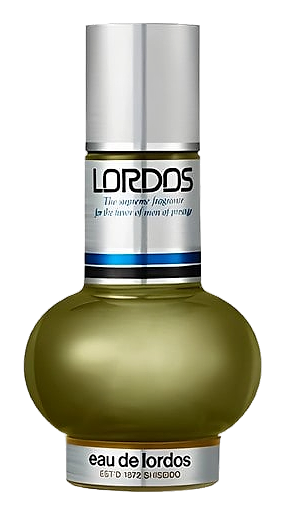
Lordos arrived in 1972 to mark Shiseido's centennial. The timing mattered, because the early 1970s offered a particular kind of breathing room for a fougère that wanted to do something slightly different. The fougère family was already the dominant language for masculine scent: aromatic, herbaceous, structured around lavender and oakmoss. Lordos entered that conversation with a distinctly Japanese ear for proportion, lighter on the heavy moss, more attentive to the floral mid register where carnation and rose get room to breathe alongside sandalwood. The composition treats balance as the whole point, a tension between green and warm that runs through every phase of the wear.
What separates Lordos from its European cousins of the same decade is the tension between green and warm. Rosemary and basil bring the bright, bitter green. Sandalwood and cedar provide a creamy, almost meditative wood floor. The carnation adds a clove-edged warmth that prevents the green from feeling austere. The lavender runs through the composition like a thread, never shouting, always present, giving the aromatic top its clean backbone. The rose in the mid register is restrained rather than romantic, more about adding a slight sweetness than about making a floral statement.
The evolution
The first twenty minutes are all green and sharp, a blast of bergamot, lemon, and petitgrain that reads almost medicinal, like a tonic poured over crushed rosemary. Then something softer pushes through. The lavender settles, the basil rounds out, and cedar and sandalwood build a warm wooden floor under the aromatic top. Rose and carnation arrive in the middle hour, powdery and slightly sweet, giving the fougère a floral heart it didn't have at the start. By hour three, the composition has shifted fully into its base: moss, tonka bean, and vanilla create a soft, ambery close, warm but not heavy, with a faint powdery trace that lingers on skin and clothes alike. The drydown is where the sandalwood finally gets its solo, creamy and slightly milky, cushioned by the moss and the faint sweetness of tonka.
Cultural impact
Lordos sits comfortably alongside Loewe pour Homme and YSL Pour Homme as one of the era's more considered fougères, a composition that takes the structural conventions of the family and treats them as a starting point rather than a formula. It wears with the kind of quiet authority that comes from balance rather than boldness, the green and the warm kept in such careful proportion that neither dominates. The kind of scent a man reaches for when he wants to smell like he has a favorite jacket, not a favorite trend.