
The Story
Why it exists.
The beginning
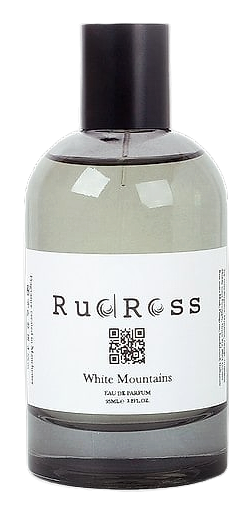
White Mountains began with a question: what does altitude smell like? Not metaphorically, actually. The RudRoss team approached the China Collection brief as cartographers, translating topography into olfactory coordinates. The fragrance needed to embody that specific clarity you find at elevation, where the air thins and everything sharpens. Bergamot and citrus opened the composition the way a ridgeline opens a view, all at once, no warning. The heart would need to carry the green density of forest at altitude, and the base would anchor it in something warm enough to wear, not just admire. White Mountains isn't nostalgia for mountains. It's mountains themselves, rendered as something you can carry.
The note structure creates a specific kind of tension: citrus at the top is inherently bright and horizontal, while green tea and blackcurrant pull downward into something denser and more shadowed. These two energies don't fight, they negotiate. The pineapple in the heart is the unexpected element, the concession that keeps the composition from feeling austere. It's sweetness with a purpose: it represents the warmth that exists even at elevation, the pockets of sunlight that break through cloud cover. Galbanum, often used as a green accord anchor, appears in the base alongside petitgrain and sandalwood, creating a drydown that smells like wood that hasn't quite dried out yet.
The evolution
The first minutes are all clarity. Bergamot, mandarin, grapefruit, orange, four citrus elements firing in sequence, each one amplifying the one before it. The effect is almost crystalline. Around 20 minutes in, the green tea enters and something shifts. The citrus doesn't disappear, it retreats, becomes the light rather than the landscape. Blackcurrant adds a tartness that grounds the pineapple sweetness, keeping it from reading as dessert. By hour two, the drydown has begun its slow arrival: petitgrain and musk layering into something intimate, skin-adjacent. The sandalwood doesn't announce itself, it smooths everything that came before. Six to eight hours on most skin. What lingers the next morning isn't fruit or citrus. It's the ghost of green, still present, still quiet.
Cultural impact
White Mountains joins a RudRoss catalog that reads like a travelogue of contemporary experience, Road to Paradise, Mineral, One More Time, each title positioning the wearer as someone navigating rather than arriving. The China Collection, of which this fragrance is part, frames these landscape translations through the lens of Yin and Yang, seeking harmony between contrast. Within the broader niche fragrance landscape, this positioning, contemporary, globally fluent, aesthetically curious, places RudRoss among houses serving a collector who treats fragrance as cultural literacy rather than heritage status.