
The Story
Why it exists.
The beginning
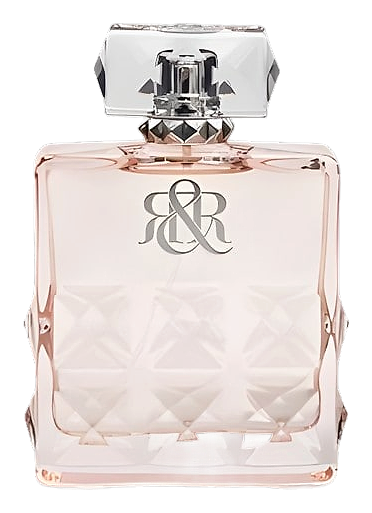
Rock & Republic for Women sits within a translation of label identity into something you could wear, not just see. This eau de toilette was built to carry a specific kind of attitude through scent, the kind that doesn't ask permission before it walks into a room. The composition is pared down to three notes, a structural choice that reads as deliberate editing. The grapefruit opens cold and electric, almost bitter in the way the pith clings to the fruit, the olfactory equivalent of a neon flicker in a dark parking lot. Black orchid arrives as the dark middle, plush and slightly narcotic, dense enough to feel almost bruised rather than freshly cut.
What makes this composition interesting is its restraint. Three notes is a confident count, and the arrangement of those notes gives the fragrance its entire arc. The grapefruit-to-orchid-to-patchouli progression reads like a night moving from bar light to bedroom hush, with each transition feeling earned rather than engineered. Black orchid is the structural pivot here. It bridges the bright citrus opening and the heavy earth base with a plush, almost bruised floral density that keeps the citrus from reading as mere cologne splash and keeps the patchouli from collapsing into hippie territory.
The evolution
The opening belongs entirely to grapefruit, sharp and effervescent, almost bitter in the way the pith clings to the fruit. It reads cold, clean, slightly synthetic in a good way, like city air right before rain. This is the version of the fragrance that gets mistaken for a men's cologne on a passing stranger, and that misread is part of its charm. As the fragrance warms against skin, black orchid begins to surface. It doesn't replace the grapefruit so much as absorb it, turning the bright citrus into something warmer and slightly narcotic. The floral here is dense, almost bruised, less fresh-cut-flower and more crushed-petal-in-a-dark-room. The composition deepens noticeably during this phase, and the brightness of the opening recedes into a darker, more textured middle. Eventually, patchouli settles in fully.
Cultural impact
This fragrance occupies an interesting space in the early-2000s landscape because of how directly it borrows from clothing-brand logic. Rather than positioning itself as a standalone beauty object, it reads as an extension of a larger visual identity, a scent designed to match a certain wardrobe and a certain posture. The pared-down, three-note structure supports that positioning. Where many launches of the period leaned on stacked accord pyramids to convey value and complexity, this one holds back, and that restraint reads as confidence rather than limitation.