
The Story
Why it exists.
The beginning
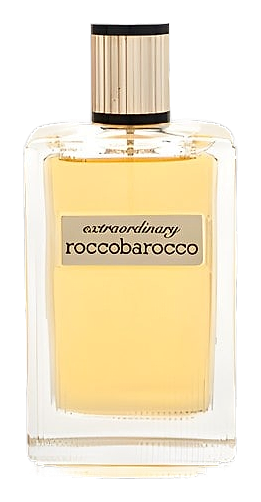
In 2000, Roccobarocco released Extraordinary, a fragrance that made no apologies for what it wanted to be. The Italian house had built its identity on bold fashion, sharp silhouettes, and clothes that refused to disappear into a crowd. The brief for this scent carried the same energy. It wasn't about subtlety or restraint. It was about white florals given full permission to take up space. The perfumer, IrisNobile, chose a structure that mirrored the brand's runway confidence: a neroli-peach opening bright enough to stop traffic, a floral heart that refused to be ignored, and a mossy-woody base that kept everything grounded in something real.
What makes Extraordinary interesting isn't the individual notes, tuberose and jasmine appear in dozens of fragrances. It's the architecture. The top doesn't retreat quickly; it lingers alongside the heart, creating a luminous phase where citrus and florals coexist without one drowning the other. Then the oakmoss arrives like a floor, anchoring the sweetness with something earthy and almost green. Sandalwood and amber follow, turning the base into something warm rather than heavy. The result is a fragrance that moves from brightness to lushness to warmth without any jarring transitions, a continuous conversation between light and depth.
The evolution
The first five minutes belong to neroli and peach. Bright, almost juicy, with a clean sweetness that feels like morning sun through a window. No sharp edges. No citrus bite. Just warmth. Around the ten-minute mark, the florals begin their takeover. Tuberose pushes through first, green, indolic, demanding. Jasmine joins within minutes, and for a stretch of thirty to ninety minutes, these two dominate everything. This is the heart of Extraordinary, and it's not for the faint-hearted. The hyacinth adds a watery, slightly green lift that keeps the tuberose from going fully animalic. Then, imperceptibly, the florals begin to soften. The green edges round off. Oakmoss emerges as a dry, earthy counterweight, the smell of damp bark, not sweet moss. Sandalwood follows, bringing warmth and a faint creamy texture. Amber settles last, wrapping everything in a soft glow that lingers for hours. On fabric, the drydown can last into the next day, a faint warmth that sneaks up on you in the morning.
Cultural impact
Extraordinary arrived in 2000 as part of a wave of bold white floral fragrances that defined that era's approach to feminine scent, lush, unapologetic, and built to last. While many contemporary releases leaned toward lightness and versatility, this one leaned into intensity. The fragrance attracted wearers who wanted florals that actually meant something, and it developed a devoted following among those who appreciate tuberose without apology. Today it occupies a particular niche: loved by those who've discovered it, sought after by collectors of Italian fragrances, and remembered by anyone who encountered its sillage in the wild.