
The Story
Why it exists.
The beginning
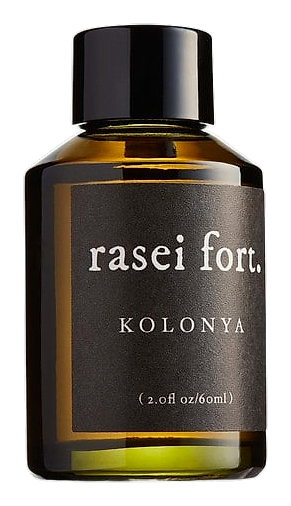
Kolonya is the Turkish word for cologne, a disinfectant rooted in Ottoman tradition, the smell of public buildings and grandfathers and Sunday shirts. Rasei Fort grew up with that scent. His earliest memories: jasmine blooming in his grandfather's garden, lemon trees, the particular crispness of a starched collar still warm from wear. Kolonya doesn't try to recreate what cologne was. It tries to recreate what cologne meant, that particular weight of being close to someone you loved. The citrus opens bright, almost startling in its clarity. Then the florals arrive, slow and deliberate, like a memory surfacing mid-afternoon. Hay. Rose. Tobacco. All the green, dusty, sun-warmed parts of growing up somewhere hot and dry. The name is the brief. Everything else is what happened when a perfumer stopped working and started remembering.
The note list reads like a map of everywhere Turkish fragrance has been: citrus from the Mediterranean coast, jasmine from the valleys, spices routed through centuries of trade. But Kolonya's trick isn't abundance, it's restraint. There's enough here to fill a perfume encyclopedia, yet it never announces itself. The citrus-to-florals-to-woods arc is textbook cologne structure, but Rasei Fort adds depth without adding weight. The galbanum keeps the florals grounded. The hay keeps the woods honest. The tobacco isn't smoky, it's warm, dry, the smell of fabric sun-drying on a line. What makes this composition unusual is that it refuses urgency. Most modern fragrances try to grab you in the first thirty seconds.
The evolution
The opening hits like a glass of fresh-squeezed juice at a market stall, blood orange, pink grapefruit, bergamot, petitgrain. The citrus is sparkling and immediate, a bright, clean assertion that this is, undeniably, cologne. Galbanum adds a green undertone, neroli softens the edges. This first chapter lasts about thirty minutes before the hand-off begins. The heart introduces jasmine, ylang-ylang, rose, orange blossom, a white floral cluster that arrives slowly, almost tentatively, then settles in with quiet authority. Hay and rosemary give it an herbal, slightly dry edge. The spice notes, clove, nutmeg, white pepper, coriander, don't announce themselves so much as embed, warm and dusty rather than hot. Tobacco and geranium thread through. Around the one-hour mark, the base begins to assert itself: cedar, sandalwood, vetiver, oakmoss. The woods are earthy, the moss is present (and welcome), and the benzoin adds a faint resinous sweetness beneath everything. The drydown is intimate.
Cultural impact
Kolonya occupies an unusual space in the niche fragrance world: it's simultaneously a tribute and an abstraction. The reference point, Turkish cologne, the smell of a specific time and place, is instantly recognizable to anyone from that culture, while the execution is layered and complex enough to stand on its own globally. It's not trying to compete with mass-market colognes, nor is it trying to out-weird the niche avant-garde. It's simply making a case for memory as a valid creative framework. The response from the fragrance community has been consistent: people who connect with it connect deeply, describing it as the rare scent that makes them feel something specific.