
The Story
Why it exists.
The beginning
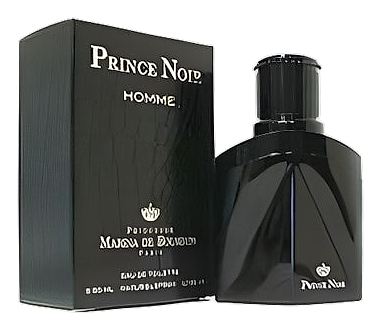
Prince Noir arrived in 2007 as part of Princesse Marina de Bourbon's exploration of modern masculinity. The name carries historical weight: the Black Prince of Aquitaine, Edward of Woodstock, known for tactical brilliance and an armor that earned its color from his reputation before any battle. This fragrance borrows that energy, command without spectacle. The composition opens with cardamom and Amalfi lemon, sharpened by black pepper, creating an aroma that announces itself without raising its voice. Cedarwood and geranium form the heart, lending structure and a green-floral counterpoint to the initial brightness. The drydown settles into vetiver and amber, warm and close to the skin rather than broadcast across a room.
What makes the structure interesting is the hand-off between phases. The opening salvo, cardamom, Amalfi lemon, black pepper, is genuinely arresting. It's citrusy in the way that cuts rather than refreshes, with cardamom lending an almost medicinal sharpness that most wearers either love immediately or need ten minutes to appreciate. Bourbon geranium adds a green, slightly rosy quality that prevents the cedar from reading too much like pencil shavings, while cinnamon threads warmth through the middle without overwhelming the woody foundation.
The evolution
The first hour belongs to cardamom and black pepper. The warmth of the opening remains as the composition evolves, with cinnamon and cedar arriving to reshape the initial impression. Geranium adds a brief green-floral accent that most wearers won't consciously notice but will register as balance. The drydown gradually becomes vetiver-forward, earthy and dry, with amber finally surfacing as a skin-warm undertone rather than a statement. Brazilian rosewood appears inconsistently, on some skin types it lingers for hours, on others it disappears entirely. What's consistent is the longevity, with the fragrance remaining present and cohesive throughout its wear. The sillage stays within a moderate range, no explosive opening, no quiet fade. Just a steady presence that people notice when they're close enough to speak quietly.
Cultural impact
Prince Noir occupies a particular space in the market that has proven durable. It sits between the truly niche and the broadly distributed, accessible enough to find but not so ubiquitous it loses identity. The fragrance's structure has held up over time: an opening worth experiencing, a heart that earns its keep, and a drydown that doesn't abandon the wearer. What distinguishes it from contemporaries is the coherence of its progression, how each phase flows into the next without jarring transitions or moments where the composition loses focus.