The Story
Why it exists.
The beginning
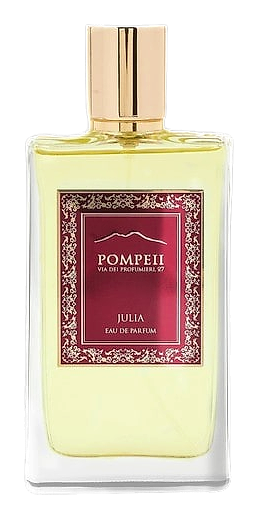
Julia takes its name from Julia Felix, a woman who owned an entire city block in ancient Pompeii and ran it like a business. She rented rooms, managed her property, and turned real estate into revenue at a scale that would make modern landlords blink. Two thousand years before the word "entrepreneur" existed, she was already running the numbers. The official description captures her posture perfectly: confident, hospitable, sharp, and never waiting to be asked. Pompeii built Julia around that sensibility, and the 2025 composition channels it through spice, rose, and cedarwood, materials that feel grounded rather than decorative. Cumin and pepper bring heat without aggression. Vetiver and musk keep everything rooted.
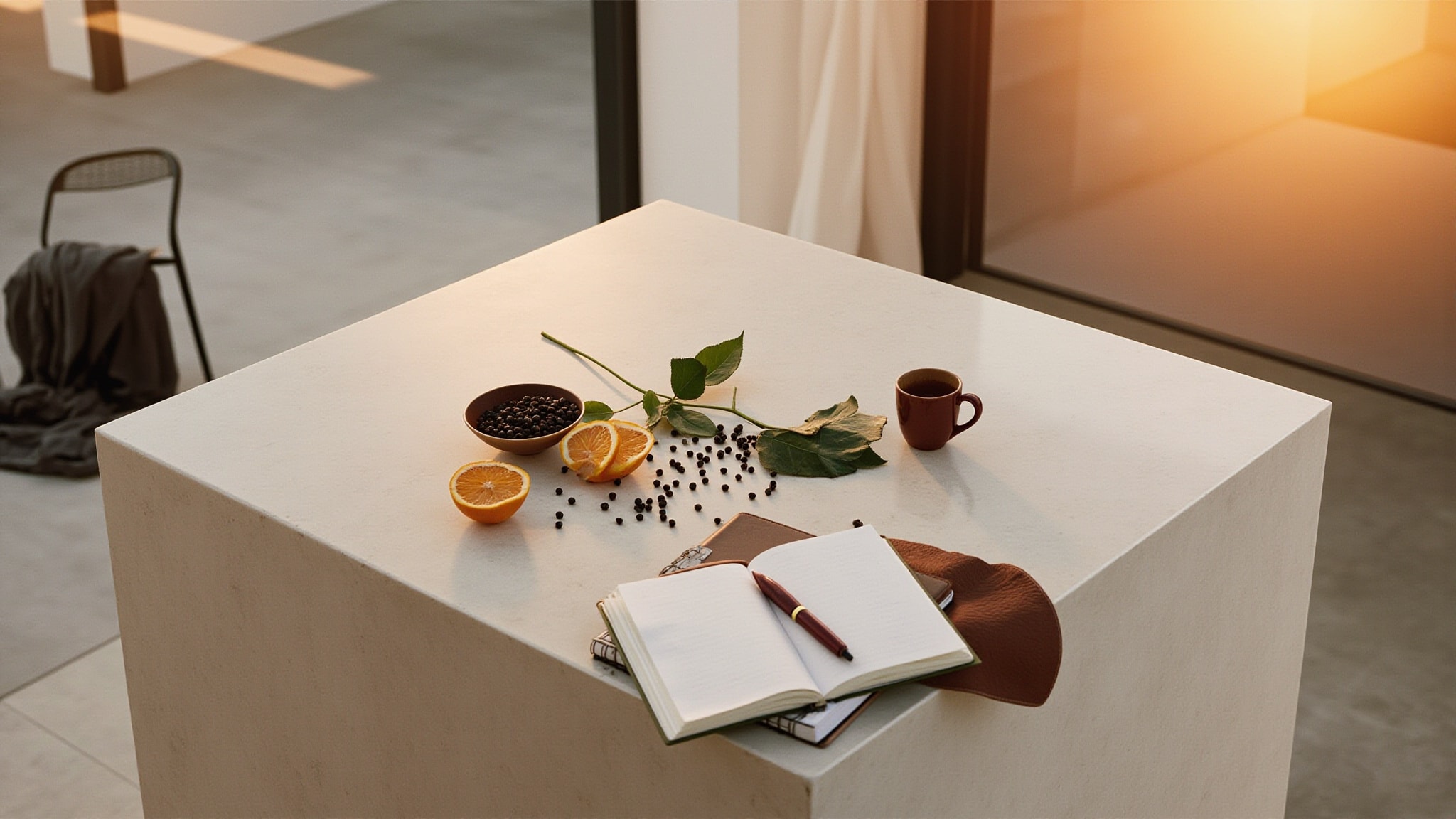
What makes Julia interesting is the spice architecture. Cumin, nutmeg, and black pepper don't usually share a top note with bergamot, and the tension between citrus brightness and dry, earthy heat defines the opening. The rose sits in the middle of this conversation rather than floating above it, grounded by the spice rather than competing with it. The woody backbone earns the composition its structural weight. Cedarwood and vetiver at the heart, musk and woodsy notes at the base, all of it pulling the fragrance downward into something lasting rather than fleeting.
The evolution
The opening is loud on purpose. Bergamot opens bright, then the cumin, nutmeg, and black pepper arrive almost immediately, warming everything into a spiced, almost savory cocktail. The citrus doesn't disappear so much as get absorbed into the heat, and the fragrance hits its peak intensity early. It's the loudest the composition will ever be, and it wears that volume with intent. Once the spice settles, the cedary, earthy heart takes over. Rose shows up here, but it's a rose with soil under its fingernails, not a rose from a florist's case. The vetiver is what does the real work in this phase, binding the cooling spice to the rising wood. The composition reads drier now, more architectural, like the scent equivalent of good lighting in a room with high ceilings. As the hours pass, the musk settles into the base and the fragrance pulls noticeably closer to skin.
Cultural impact
Julia occupies a specific lane: rose-driven compositions that refuse to play sweet. It leans hard into the spice side, treating cumin and pepper as structural notes rather than accents, and that choice gives the fragrance a confidence many florals lack. The cumin note draws reaction, which usually means a composition is doing something with intention. Wearers describe it as a scent that signals command without raising its voice. The rose, cedar, and vetiver keep it grounded while the spice keeps it sharp. It's the kind of fragrance that rewards attention without demanding it.