
The Story
Why it exists.
The beginning
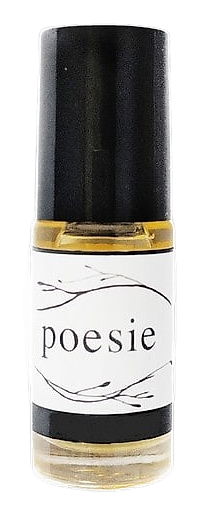
Poesie releases begin with a brief: a female figure, real or imagined, and a mood to translate into olfactory language. The intention for this one was restrained. A woody, musky character that reads like a quiet aside rather than a speech. No floral sweetness pulling focus, no spice demanding the room. Just a study in sandalwood, teak, coriander, and skin-close musk, dressed down to feel like something you'd reach for without thinking about it. The composition leans into materials that feel worn-in rather than freshly turned out, the kind of notes that settle against warm skin and ask for very little in return. Coriander opens with a clean snap, almost peppery, and then steps aside to let the woods take over.
The composition is small on paper and dense on skin. Coriander handles the only sharp edge in the pyramid, a dry, almost lemony lift that keeps the woods from going heavy. Sandalwood and teakwood share the middle and base, which gives Marlowe a single sustained tonal temperature rather than a top-to-bottom decay. Musk threads through both, more a binding agent than a base note in itself. The result is a fragrance with fewer moving parts than most, and that frugality is the point. Nothing competes for attention. Nothing performs. The scent arrives whole and stays whole.
The evolution
The opening is brisk, noticeably so if you're used to florals. Coriander cracks the surface like a window thrown open, brief and almost savoury. The coriander recedes quickly, and the scent moves from that initial snap into a creamier register of sandalwood. The teak keeps things from going soft. It adds a faint dry grain, a little like raw wood you can almost feel. Musk surfaces somewhere around the forty-minute mark, and it stays. This is the base. Sandalwood and teak hold their shape through the afternoon into early evening, the composition losing its edges but never fully quieting. The drydown is where this scent does its real work, settling into something close to warm skin with a woody hum underneath.
Cultural impact
Wearers tend to describe Marlowe as the kind of scent that makes someone lean in closer rather than turn around. It earns that description honestly, with a composition that keeps its volume low and its materials close. The people who reach for it are typically drawn to musky wood fragrances as a category, not searching for projection or complexity, but for something warm, steady, and personal. There's an affection for the texture of the thing, the dry graining of the teak, the cream of the sandalwood, the closeness of the musk, that matters more than how far it throws.