
The Story
Why it exists.
The beginning
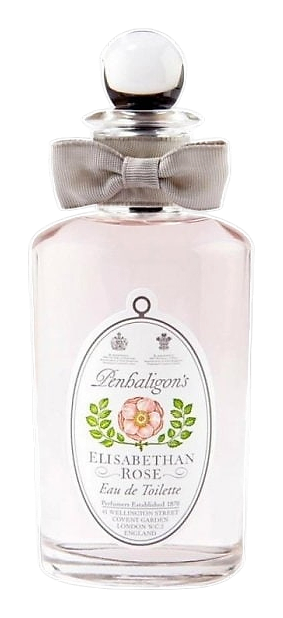
Launched in 1984, Elisabethan Rose arrived from the house of Penhaligon's with a dewy, green-leaning rose at its center, the sort of bloom you'd find in a country garden rather than a florist's window. The perfumer, Michael Pickthall, built the composition around that single floral idea and let the supporting cast do the rest. The opening aldehydes do the heavy lifting early, lending the aldehyde-bright sparkle of vintage perfumery, while geranium keeps the whole thing from tipping into sweetness. There's a cool snap to those first few minutes, almost metallic in its clarity, before the warmer floral heart begins to settle in. It's a study in restraint, a rose fragrance that understands quiet can be more persuasive than volume.
The structural balance Pickthall achieved gives this composition its quiet authority. Geranium leads the top, which gives an herbal green facet that reads more sophisticated than fruity, a departure from the brighter citrus openings common in many rose fragrances. The aldehydes are present enough to add lift and a soapy clean edge without overwhelming the green character beneath them. In the heart, chamomile does quiet work alongside the rose, softening petal edges and lending a tea-like warmth that weaves through the central floral. Violet adds a powdery shadow, almost dusty in its softness.
The evolution
The first ten minutes are the brightest the fragrance gets. Geranium and aldehydes arrive together with a cool, almost metallic snap, the kind of opening that feels clean in a deliberate way, not just soapy. That briskness softens by the half-hour mark as rose and chamomile take over. The chamomile is subtle, more an undercurrent than a statement, but it shifts the whole composition toward something warmer and more herbal. The rose here never turns syrupy. It stays at arm's length, which is part of the charm. By hour two, violet and the warmer base notes start pulling the scent closer to skin. The sandalwood arrives quietly, followed by a musk-amber hush that wraps the whole composition in something soft and almost powdery.
Cultural impact
Elisabethan Rose holds a particular place in the Penhaligon's lineup as a classic floral, the kind of scent that wearers describe as polished without trying. A 2018 reformulation of the same name now centers on hazelnut leaf and rose centifolia, giving the original a quieter legacy among those who remember it from earlier decades. There's a restraint to this fragrance that sets it apart from more decorative florals, a willingness to let the rose speak softly rather than crowd the composition with supporting notes. Wearers tend to come back to it for that very quality, the kind of quiet that reads as confidence rather than absence.