The Story
Why it exists.
The beginning
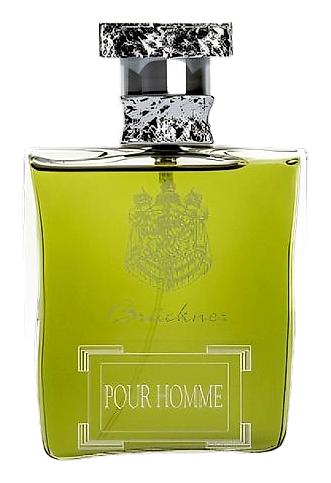
The Les Hommes collection arrived as Parfumerie Bruckner's considered answer to a specific question: what does a masculine fragrance look like when it isn't trying to prove anything? Pour Homme entered the lineup in 2015, built on the fougère structure that defined men's perfumery for a century, citrus, lavender, woods, then pushed the green and aromatic character until it felt contemporary rather than nostalgic. The house's compact catalogue has always moved between bold and restrained. Pour Homme sits in the second category, but it's not quiet by accident. It's quiet because it's confident.
The note architecture is textbook fougère, but the execution isn't. Lavender anchors both the opening and the base, creating a structural continuity that most fragrances in this style skip in favor of easier transitions. The jasmine and geranium heart keeps things from going heavy. The result is a fragrance that holds its shape across a full day without shifting into something unrecognizable. That's harder to achieve than it sounds.
The evolution
The opening hits bright, bergamot, citrus, then the lavender arrives and doesn't wait. It announces itself with that clean, slightly camphorated edge that defines the fougère family. The florals don't dominate, they keep the herbs from going medicinal. Cedar emerges first, dry and sharp, then pine adds a faint resinous warmth before sandalwood softens everything into the base. But close, still close.
Cultural impact
Pour Homme occupies an interesting position in the Les Hommes collection, not the statement piece, but the one that holds the line. It doesn't try to reinvent the fougère. It just does it cleanly, with better balance than most fragrances at this price point. The green-spicy character has earned it a following among collectors who appreciate fougère heritage without wanting to smell like 1985.