
The Story
Why it exists.
The beginning
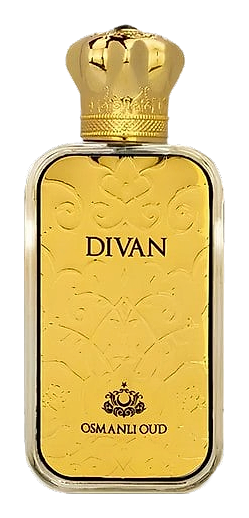
Divan takes its name from the Ottoman divan, a word rooted in the language of empire and governance. The Osmanli Oud house has composed fragrances whose names evoke the gravity and texture of that era: Süleyman the Magnificent, Kösem the Magnificent, Bayezid The Thunderbolt. Divan belongs to the same lineage, a composition that gestures toward the mood and material world those names conjure. The opening is immediate and slightly cool, the green bite of freshly cracked cardamom hitting first, bright and almost sappy before the heavier notes settle in. Then jasmine sambac arrives, not a clean white-flower whisper but something fleshier, with the indolic heat that reads as skin warmed by afternoon sun rather than a blossom on a stem.
What's clever about the composition is how it stacks two materials that don't traditionally share space. Leather, in Western perfumery, tends to ride with tobacco, birch tar, or violet leaf. Here it's wrapped in jasmine sambac, a flower that adds green indolic heat rather than sweetness. The result reads less like a saddle shop and more like a high-ceilinged court where someone is burning resin in the corner. The cardamom at the top is the only flourish, a brief crack of bright spice that cools almost immediately into the leather's depth. Osmanli Oud doesn't chase trends or reference other houses. The reference points here are architectural.
The evolution
The opening moves fast, with cardamom hitting bright and almost green, the sensation of pods crushed between fingers just before they release their full depth. The jasmine sambac follows close behind, and it lands not as a bouquet but as a shadow, carrying that indolic edge that reads as warm skin rather than a stem-cut flower in a vase. As the composition settles, the leather takes its place at the center, smooth, slightly sweet, more like the surface of a well-worn book cover than anything glossy or new. With time the jasmine recedes almost entirely, and the base reveals its character: patchouli darkens the leather into something earthier, amber warms the whole arrangement from beneath with a resinous sweetness, and a moss note adds a damp, cool quality that keeps the warmth from becoming heavy.
Cultural impact
Divan sits within Osmanli Oud's Saray, or Palace, collection, a series of compositions that share naming conventions drawn from the Ottoman world. The Saray collection includes fragrances named after Ottoman figures, and Divan takes its place among them with a name that gestures toward the institutional language of empire rather than any specific ruler or event. In a market dense with oud-forward compositions, Divan's leather and jasmine construction offers something distinct, a fragrance built around texture and warmth rather than smoke or heavy resin.