
The Story
Why it exists.
The beginning
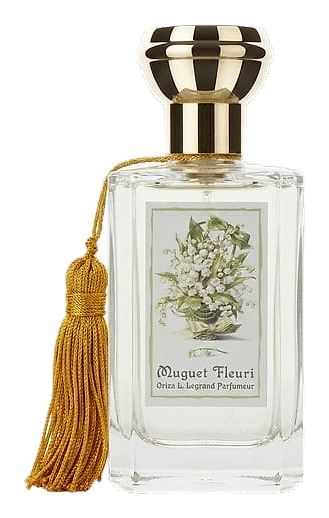
Muguet Fleuri arrived in 1920, a time when Oriza L. Legrand was already deep into its second century of French perfumery. The brief was simple and almost impossible: bottle the lily of the valley. Not as an accent, not as a supporting note, as the entire composition. The house accepted the challenge and spent years refining the formula until it captured what the flower actually smells like on a cool May morning, when the bells are still heavy with dew and the green hasn't warmed yet.
What makes Muguet Fleuri unusual is its vertical structure. Most fragrances built around a single flower use supporting notes to round it out, create depth, add shimmer. This one builds upward instead. The green notes, galbanum, violet leaf, wild grass, don't compete with the muguet. They frame it. They give it architecture. Oakmoss anchors the base, adding an earthy quality that keeps the flower from floating into abstraction. The result is a fragrance that smells like a real stem, not a synthetic reconstruction. For collectors who know what lily of the valley actually smells like, not the powdered version, not the soapy version, this is the reference point.
The evolution
The opening hits cold and bright. Lily of the valley arrives immediately, green and sweet, with none of the delay that more complex fragrances require. The first twenty minutes are the sharpest, dewy, almost antiseptic in its cleanliness. Then the green deepens. Violet leaf emerges, adding a cool vegetable note that stops the sweetness from becoming cloying. The heart holds for two to three hours, the lily growing waxier, more realistic, that specific smell of stems and leaves rather than perfume. As it fades, oakmoss arrives to ground everything, introducing a quiet earthiness that keeps the flower from disappearing into nothing. The final drydown is a ghost of muguet, sweet and dry, the smell of old-fashioned florals that lingers on skin into the evening.
Cultural impact
Muguet Fleuri occupies a specific corner of the niche world: the reference point for lily of the valley purity. Collectors who consider themselves muguet specialists, people who can tell the difference between the real thing and a synthetic approximation, consistently return to this fragrance. It sits alongside Diorissimo as a touchstone, though Dior's version has broader recognition while Oriza's has deeper devotion among those who know it. The 2014 reissue brought the 1920 formula back into circulation without altering its character. For a certain type of wearer, someone who finds the single-flower concept elegant rather than limiting, this remains the answer.