
The Story
Why it exists.
The beginning
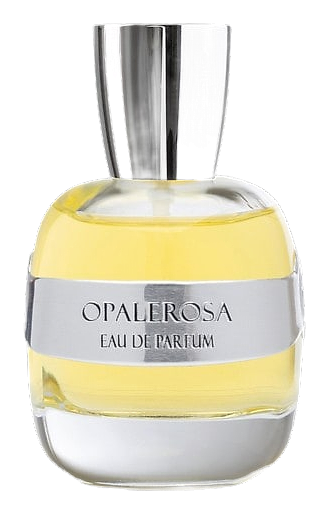
Fabrizio Tagliacarne called it Opalerosa, opal and rose, a stone and a flower, joined. The name came from a journey during Oman's Spring Festivals, when the roses of Jabal Akhdar bloom on the verdant plateaus of the Hajar mountains and the air turns thick and intoxicating. He witnessed it. He brought that memory back. Opalerosa is the translation of that trip into liquid: the altitude, the heat, the roses pressed against ancient rock, the air heavy with something almost too much to breathe. The fragrance doesn't try to reproduce Oman. It reproduces the feeling of standing in it and not wanting to leave.
What makes Opalerosa distinctive is its willingness to hold contradictions. The Black Baccara rose is already a darker rose, wine-dark, velvety, not the bright pink grocery store variety. Then the praline and vanilla arrive in the base and sweeten the whole thing without making it edible. The oud and cedar keep it grounded. The violet keeps it soft. It is animal-sweet, as the sources describe it, but the sweetness doesn't overpower. The animalic doesn't dominate. They negotiate. That tension, between sweetness and darkness, between softness and depth, is what makes the composition feel like something rather than nothing. This is not a safe fragrance. But it is a resolved one.
The evolution
Bergamot and mandarin open clean, a brief clarity that lasts maybe twenty minutes before the rose takes over. Once Black Baccara rose arrives, it doesn't leave. Not the same way. It evolves within itself, richer, darker, pressing closer to the skin as the citrus recedes. Violet arrives quietly, powdering the rose without diminishing it. The drydown is where the oud earns its place. Smoky, resinous, almost meaty, it surfaces through the praline and vanilla, adding weight and shadow. Cedar and patchouli form the floor. The next morning there is still something there, a warm, sweet, faintly animal trace on the wrist that suggests the night wasn't quite finished.
Cultural impact
Opalerosa reflects a broader cultural moment where Italian artisan perfumers are reinterpreting Middle Eastern olfactory traditions for Western audiences. The fragrance draws from Omani rose and oud, materials deeply embedded in Arabian perfumery culture, while presenting them through the lens of European artisanal craftsmanship. The Collezione Stones collection, to which Opalerosa belongs, uses minerals and raw materials as conceptual anchors, creating a bridge between geographic origins and the art of Italian perfumery.