
The Story
Why it exists.
The beginning
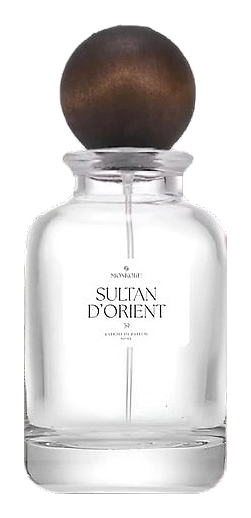
Sultan d'Orient arrived in 2025 from Monkoku, a house that arrived quietly but with a clear point of view. The name gestures east, toward the spice routes where cinnamon, rose, and oud have traded hands for centuries. Laotian oud, Ceylon cinnamon, Turkish rose, and Indian oud form a map of the historic perfume corridor from Southeast Asia through South Asia and into Anatolia. The composition leans into its oriental-spicy classification without hiding behind it, presenting itself as a unisex extrait that earns its richness note by note. There's a seriousness to the construction: no fruity shortcuts, no synthetic shortcuts, just the architecture of a well-built oriental built around the interplay between bark, bloom, and resin.
What's distinctive here is the layering of two oud origins beneath a Turkish-Damask rose heart. Pairing both with Ceylon cinnamon and pear in the opening creates a friction point: the cool fruit against the hot bark, the sweet against the funky. The cedarwood at the heart acts as a structural column, holding the rose and oud in place while the amber and vanilla underneath build a floor that doesn't collapse. The interplay between the two oud expressions gives the composition a sense of dialogue rather than monologue, one note answering the other across the drydown.
The evolution
The first thirty minutes are where Sultan d'Orient announces itself. Ceylon cinnamon lands first, hot and almost edible, before the pear cools the temperature and lavender adds a clean, soapy edge. Laotian oud threads through quietly, still reading green and unfamiliar. By the one-hour mark, the cinnamon has mellowed into a warm haze and the Turkish and Damask roses have taken the wheel, jammy and dense, slightly bruised, sitting on a bed of cedarwood that gives the whole thing architecture. Indian oud surfaces here, darker, more animalic, and the composition shifts from opulent to something almost smoky. The drydown is where this one earns its reputation for endurance. Amber, sandalwood, tonka bean, and vanilla build a skin-close resinous warmth that holds through a full day of wear and into the evening.
Cultural impact
Sultan d'Orient has drawn early attention from wearers who describe it as accessible oud, heavier on rose and spice than the barnyard extremes of the genre, which broadens its audience without diluting the character. The early conversation around the fragrance has centered on how it wears, how it evolves through the day, and how it compares to other oud-rose compositions that sit at higher price tiers. Some wearers have noted its similarity to Alexandria II, pointing to the shared spicy-rose-oud territory as a reference point for anyone considering a purchase.