
The Story
Why it exists.
The beginning
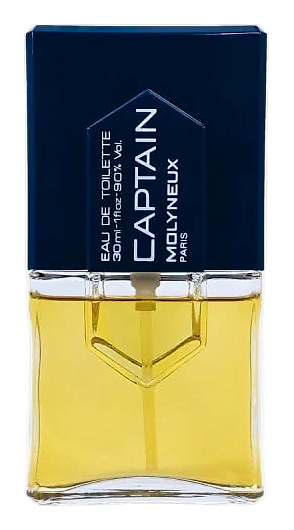
Molyneux arrived in 1927 as a Paris couture house built on restraint and clean lines. Edward Molyneux dressed European royalty and American socialites with the same philosophy: say only what needs saying. The fashion house began producing perfumes that same year, extending the aesthetic into fragrance. Captain came in 1975, a men's release that stepped away from the aldehydic florals the house had been known for. Instead, it went into the garrigue, the wild, sun-baked herbs of southern France. Lavender, rosemary, thyme, myrtle. Warm rock and Mediterranean scrub. The name suggested command, and the composition delivered something that felt genuinely rooted in place and time. Not a naval theme. Something older. The authority of a landscape that has always been there.
What makes Captain structurally interesting is the sheer volume of aromatic materials it holds simultaneously. Thirteen ingredients listed in the top alone, lavender, rosemary, thyme, myrtle, ginger, clove, cinnamon, cedar, sandalwood, vetiver, pine, patchouli, labdanum. In lesser hands, that would be noise. In this composition, it reads as density. The fougère framework holds it all: the lavender and herb top, the warm spice mid-layer, the woody-vetiver base. Each phase bleeds into the next rather than replacing it. You smell the whole structure at once, then watch it reorganize itself over hours. That complexity is what keeps people coming back to it decades later.
The evolution
The opening is immediate: Provençal lavender and rosemary, cool and clean, almost medicinal in its precision. Ginger and clove arrive within minutes, warming the top without softening it. The heart phase takes over around the thirty-minute mark, the sandalwood and cedar asserting themselves, the vetiver providing a smoky, mineral counterweight. The whole structure holds for hours. By the drydown, the herbs have settled, the spices have faded, and what remains is vetiver and cedar, powdery and close. The sillage stays moderate throughout. Not a fragrance that fills a room, more the kind that someone standing beside you notices and leans toward.
Cultural impact
Captain has lived quietly in the shadow of bigger names since 1975. Among collectors who track classic fougères, it surfaces as something worth hunting, distinct from the commercial releases of its era, holding its own against fragrances at a fraction of the price. The aromatic structure and woody drydown have kept it relevant with enthusiasts who appreciate complexity over trend.