
The Story
Why it exists.
The beginning
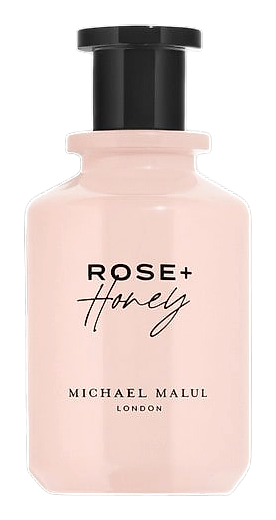
Rose+Honey arrived in 2022 as Michael Malul London's dedicated entry into the sweet rose conversation, already crowded territory, but one where the house saw room to say something direct. The perfumer Hamid Merati-Kashani built the composition around a single tension: fruit and flower at the same volume, neither overpowering the other. The name is the brief. Rose. Honey. Nothing hidden, nothing complicated. It was positioned as the fragrance for someone who wants to smell like they care about what they're wearing, without the ceremony.
What makes the structure interesting is how the heart doesn't arrive, it emerges. The top notes of tangerine and Mara des Bois strawberry create an immediate fruity brightness that most people read as approachable, even playful. But Cashmeran, the synthetic musky-wood molecule in the heart, changes the register. It has a warm, skin-like quality that blends with the honey rather than amplifying it, threading sweetness into something that reads as intimate rather than confectionary. The combination of honey and Cashmeran is the architectural move here: it keeps the rose from going powdery and keeps the composition from going flat.
The evolution
The opening announces itself immediately, tangerine and strawberry, bright and tart, with the Mara des Bois strawberry giving it a wild, garden quality rather than something synthetic. The peach skin keeps it grounded. Within 20 to 30 minutes, the rose petals take over the conversation and the honey becomes impossible to ignore, not in a sticky way, more like honey warmed in the sun. The Cashmeran is the quiet structural move: it wraps the floral heart in warmth so the sweetness never feels like a costume. The drydown is where the fragrance earns its longevity. Musk and white caramel settle close to the skin, with the Haitian vetiver adding a faint earthy counterpoint that stops the whole thing from becoming saccharine. Hours later, on fabric, it smells like the idea of rose, not the flower, but the memory of it.
Cultural impact
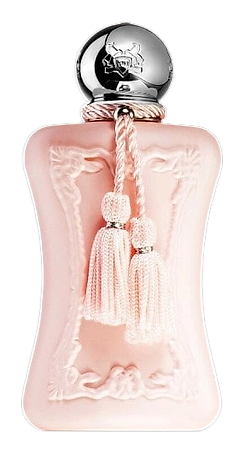
Rose+Honey arrived at a moment when sweet rose fragrances were experiencing a renaissance driven by social media discovery. Michael Malul London built its reputation on accessible niche pricing, and Rose+Honey became a case study in how independent brands could compete with heritage houses by offering recognizable scent profiles at a fraction of the cost. The fragrance found its audience among consumers who loved the Delina series but wanted a version priced for regular wear rather than special occasions.