The Story
Why it exists.
The beginning
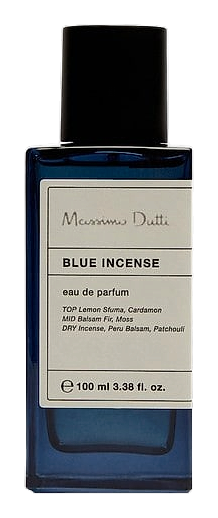
Blue Incense arrived in 2023 from perfumer Ane Ayo, part of Massimo Dutti's quiet expansion into scent. The name carries the tension: blue usually signals freshness, aquatic, clean. Incense signals smoke, resin, the opposite. Ayo was working with that contradiction from the start, a fragrance that opens like a morning and closes like a church.
The note architecture is deliberately stacked against expectation. Most incense fragrances lead with the smoke and let freshness arrive as a supporting act. Here, lemon and cardamom claim the first twenty minutes outright. The Balsam Fir and Moss arrive as a middle management, green, aromatic, slightly damp, before frankincense and patchouli finally assert themselves in the base. The journey from citrus to smoke is the whole point.
The evolution
The opening is immediate: lemon's brightness followed by cardamom's spice. No delay, no warm-up. Within fifteen minutes, the fir balsam and moss enter the conversation, shifting the register from fresh to forest-floor. The frankincense doesn't announce itself so much as seep in, by the second hour, it's the backbone. What surprises is the Peru balsam: sweet, resinous, almost vanillic in its warmth. Patchouli holds everything down for the long haul. On most skin, the drydown begins around the fourth hour and the fragrance stays close and warm through hour six or seven.
Cultural impact
Blue Incense sits in an interesting middle ground, fresher than most incense fragrances, smokier than most blue fougères. Wearers describe it as the scent of someone who walks into a room and doesn't need to announce themselves. The cardamom-lemon opening has drawn comparisons to the Loewe 7 series, suggesting a similar approach to modern, slightly bitter freshness. The moderate sillage and workday longevity make it a practical choice for professional settings, present without overwhelming.