
The Story
Why it exists.
The beginning
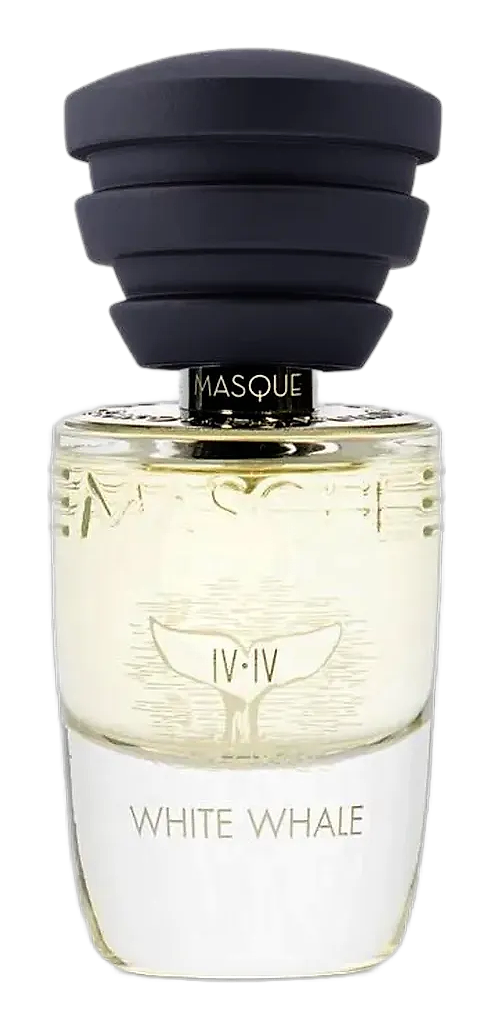
"Call me Ishmael. Some years ago, I thought I would sail about a little and see the watery part of the world." This is where White Whale begins. The epigraph is Melville's, the ambition is Masque Milano's. Part of the Opera collection's Act IV, "Act of Dreams", this fragrance was built around a single material the perfumer had been carrying in his library for years: an ambergris accord developed with natural ambergris as the target reference, mixed at IFF's Paris office. Christian Alori pulled it out, ready to use it in abundance. The brief shaped itself around it. The Pequod. Rustic, rough-cut timber built to weather the ocean's worst. Salt-stained ropes. Candle wax and smoke. This is what the woody base had to feel like, not polished mahogany, not a gentleman's study. The hull of something built to survive.
Ambergris isn't used here as a fixative. It's the centerpiece. The perfumer built the entire composition around it, pulling an accord he'd been working on in Paris and placing it at the center rather than the foundation. What you get is a fragrance where the salty-animalic note doesn't sit quietly in the drydown, it announces itself early and stays warm through the wear. The osmanthus and violet don't soften it into something floral. They add apricot and powder to a material that remains fundamentally mineral, animal, and marine. The drydown is where the cedar and vetiver earn their place: rough, dry, like driftwood found on a cold shore rather than displayed in a boutique.
The evolution
The opening hits maritime first, then sharp, African frankincense smoke meets Madagascar black pepper with a distinctly saline edge. Not aquatic in the conventional sense. Less beach, more tide pool. The salt doesn't recede as the heart develops; it deepens alongside it. Around 15-30 minutes in, osmanthus arrives with its characteristic apricot Fruity note, and Italian iris concrete adds a powdery floral quality that runs counter to what you'd expect from a salty-spicy opening. The ambergris becomes more noticeable here, warm, slightly animalic, a sweetness that feels earned rather than tacked on. This is where the fragrance makes its case. By hour two, the woody base takes over in full: Virginia cedar and Haitian vetiver providing a dry, slightly bitter finish that doesn't soften. Patchouli leaf and labdanum ground it with a balsamic resinous quality that keeps the whole thing from reading as simply fresh or aquatic. The evolution isn't gentle. The transition from marine to woody feels like a different fragrance taking over, salt giving way to bark and resin.
Cultural impact
White Whale occupies a specific corner of the niche market: ambergris-forward compositions with a salty-spicy opening and a woody-balsamic drydown. The fragrance opens with bright, almost bracing mineral qualities, the kind that suggest sea air and ocean stones. As it develops, the ambergris asserts itself, bringing forward the material's complex signature of creamy, animalic warmth layered with a translucent, almost ethereal edge. The heart introduces a interplay of spice and salt that gives the composition real presence, creating depth without heaviness.