The Story
Why it exists.
The beginning
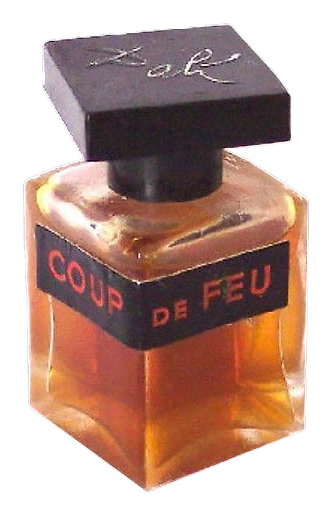
Coup de Feu arrived in 1957, a fragrance defined by a dramatic name and a tightly controlled composition. Oakmoss and galbanum establish its dark green foundation, combining mossy depth with the resinous character of galbanum. Civet adds a distinctly animalic warmth, while amber and vetiver lend a smoky, earthy depth. Against that darker ground, rose and lily of the valley provide a polished floral contrast. The rose contributes a measured sweetness, and lily of the valley adds a delicate lift. Together, the notes balance resin, moss, wood, and flowers in a composition that feels both forceful and composed.
What makes the composition memorable is its tension between woodland freshness and cultivated warmth. Galbanum supplies a green, resinous snap, while oakmoss brings shade, bark, and damp earth. The floral notes temper that darker structure. Rose adds a soft sweetness, and lily of the valley introduces a pale, powdery quality. Amber and sandalwood round the composition, while vetiver keeps the result grounded. Civet forms the expressive center of the accord, adding an animalic warmth that stands apart from the polished florals.
The evolution
On skin, the first impression is a cool, aromatic green. Oakmoss deepens that opening quickly, but the floral side remains present throughout. Rose and lily of the valley keep the composition in balance as it develops. Civet and amber introduce a warmer pulse, while vetiver sharpens the earthy base and sandalwood gives it a smooth finish. The final hours emphasize polished wood, soft musk-like warmth, and a faint powdery impression. The fragrance wears close, moving gradually from green and resinous notes toward wood, amber, vetiver, and the softened floral accord.
Cultural impact
Coup de Feu can be read through its composition rather than through an assigned cultural setting. Oakmoss, galbanum, and vetiver create an earthy foundation, while rose and lily of the valley introduce a contrasting floral layer. Civet adds warmth, and amber and sandalwood give the scent a rounded finish. The result is a fragrance that invites attention to the balance between its darker notes and its more delicate passages, with each element remaining clearly present as the scent develops.