The Story
Why it exists.
The beginning
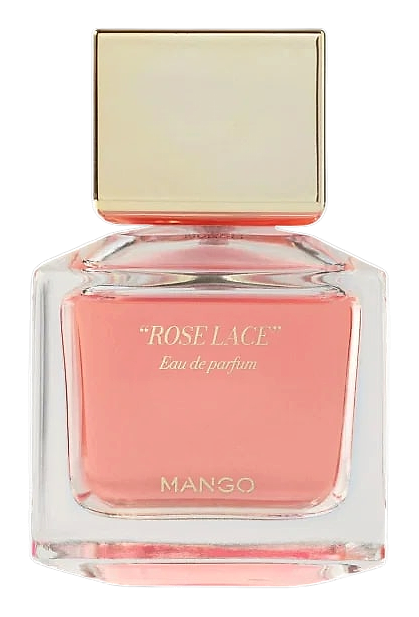
Rose Lace arrived in 2025 as part of Mango's Les Icônes collection, a line built around the kind of wearable beauty that doesn't need a runway or a red carpet to feel special. The fragrance pulls from a single, clear idea: rose at its most generous, softened until it barely whispers, then laced through with something warm enough to stay. It's not a study in restraint, it's a study in tenderness, and Mango built it for the woman who treats softness as a deliberate choice rather than a default. The name says it all. Lace doesn't announce itself. It moves with you.
What makes Rose Lace work structurally is its restraint with materials that often overpower. Cistus, a resin that can pull smoky and almost animal when used heavily, gets woven through peony and cedar instead. The peony gives the rose a dewy, almost watery lift, a counterweight to the amber top note that could otherwise feel too dense. There's no need to shout when the materials speak for themselves, and this composition understands that quiet perfectly.
The evolution
The first ten minutes belong to amber and bergamot, warm and slightly resinous, with rose pushing up underneath like something surfacing through honey. Not sharp. Not candied. Just present. By the half-hour mark, the cedar and cistus have taken hold, and the scent shifts into something closer to skin-warm suede, the peony adding a cool, petal-soft sweetness that keeps it from going heavy. The drydown is where Rose Lace settles into its real personality: a close, intimate vanilla and musk blend that sits on the skin like a memory. Longevity will vary with skin type and application, but the composition wears steadily, with the late hours leaning quiet and clean as the brighter notes step back and let the base take over. On fabric the next morning, just a trace of vanilla, barely there, like a line of perfume on a love letter you'd already sent.
Cultural impact
Rose Lace has earned steady comparisons to Gentle Fluidity Gold by Maison Francis Kurkdjian, which tells you where it sits: on the gentler, more accessible end of the rose spectrum. The reference data shows wearers frequently pairing the two, sometimes preferring one over the other depending on mood, and the shared DNA around rose, amber, and musk makes the comparison inevitable. It's a useful benchmark for anyone trying to place Rose Lace in their own collection, because the similarities are clear without the two ever feeling like carbon copies.