The Story
Why it exists.
The beginning
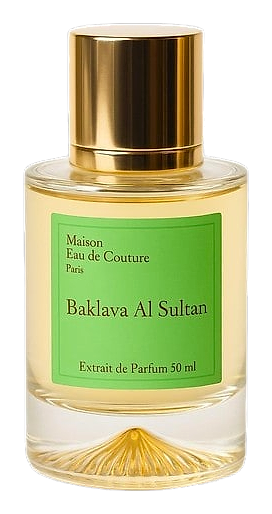
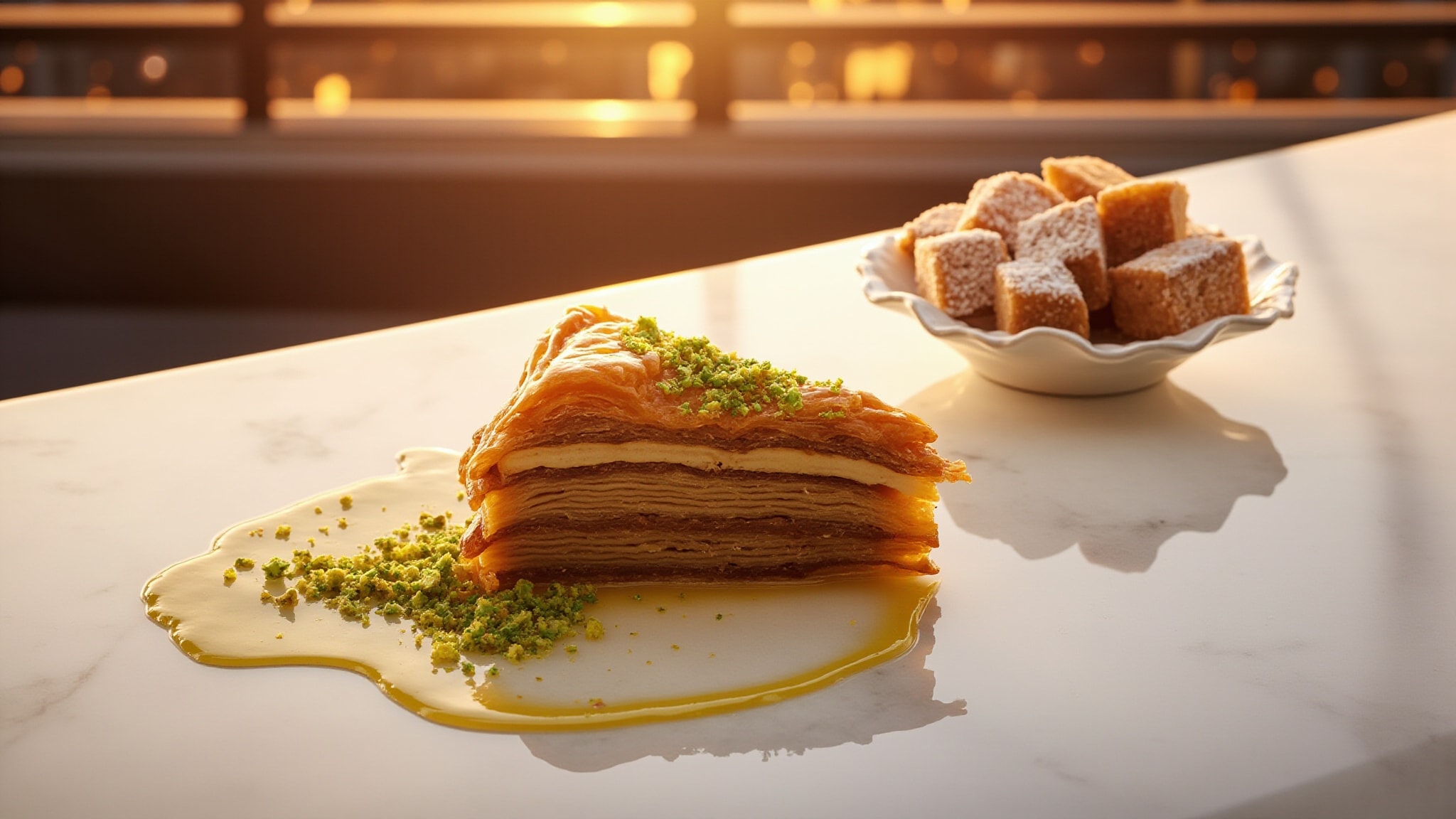
Baklava Al Sultan began with a question: what does it smell like to be royalty in Istanbul? Nejla Barbir, the perfumer behind this 2024 release from Maison Eau de Couture, looked at the Trompe-l'œil collection and saw an opportunity for edible theater. Al Sultan, the Sultan, is no modest title. This fragrance wears it unironically. Pistachio and hazelnut arrive first, cracking open like phyllo under a fingernail. Then the florals soften everything into something almost delicate. Honey, lokum, warmth that doesn't quit. It's baklava reimagined as intimacy.
What makes Baklava Al Sultan distinctive isn't the sweetness, it's how that sweetness earns its keep. The nuttiness at the opening isn't a decorative flourish. It's structural. It gives the florals something to push against. Orange blossom and jasmine don't float above the composition; they're anchored by it. Meanwhile, lokum, Turkish delight, the cousin no one talks about, bridges the gap between pastry and skin, adding a faint powdery rose quality that prevents the whole thing from flattening into syrup. Tonka bean in the base doesn't project so much as it whispers: warm, close, present.
The evolution
Pistachio and hazelnut hit the skin first, green, warm, the smell of a baklava cracked open. For the first twenty minutes, it's all crunch and sweetness. Then the orange blossom arrives, not to soften the nuts but to complicate them. White peach follows, adding a juiciness that makes the whole composition feel less like dessert and more like the moment after dessert, still warm, still sweet, but beginning to settle. By hour two, honey and lokum have taken over. The florals fade to a whisper. The tonka bean adds a quiet creaminess underneath, like the last traces of syrup on a plate. Moderate sillage means it stays close, intimate, not announced. Six to eight hours later, it's skin-warmth and sweetness. A ghost of something delicious.
Cultural impact
Baklava Al Sultan enters a niche market where gourmand fragrances routinely trade in nostalgia and excess. This one takes a different angle, French restraint applied to a Middle Eastern pastry. The result sits between the edible luxury of true Oriental fragrances and the clean construction of contemporary French design. Wearers describe it as the scent of someone who walks into a room and doesn't need to announce themselves, but leaves an impression anyway.