The Story
Why it exists.
The beginning
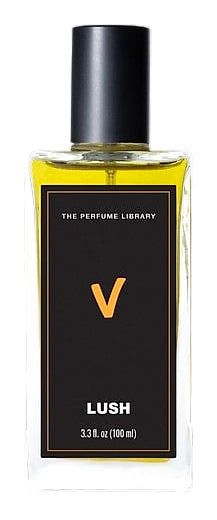
Mark Constantine launched V in 1995, the same year Lush opened its first shop on Poole High Street. The brief was simple: build a fragrance around violet that didn't apologize for itself. What arrived was something the brand itself described as "just a little bit gothic", a floral that refused to stay delicate when it could be interesting. The Ghanaian ylang-ylang came from family suppliers, as was already becoming Lush's way. But the real story was in the pairing: violet's cool intimacy against clove's sharp warmth, settled into cedar. Not a safe combination. The kind that makes you remember you chose it.
The violet-ylang-ylang pairing is what makes V unusual. Both are heady florals, tropical and intimate, respectively, but Lush didn't let them float together. They grounded the whole thing in clove and cedar: warm spice, woody depth. What could have been a standard floral becomes something with edges. The ylang-ylang opens with that signature Lush richness, almost waxy, while violet brings a cool waxy counterpoint. Cedar and clove don't arrive immediately, they wait, then anchor everything that came before. The result is a fragrance that starts floral but ends somewhere else entirely.
The evolution
Ghanaian ylang-ylang arrives first, rich, tropical, almost intoxicating. Violet follows within seconds, cool and waxy. The clove doesn't hide. It announces itself with a brief sharpness, like the moment a dentist's lamp clicks on. That phase passes. Within thirty minutes, the clove softens into warm spice, and the violet takes over. The ylang-ylang fades into the background, becoming creamy, less insistent. By hour two, you're in the heart: violet dominant, cedar beginning to ground everything. The drydown begins around hour four. What remains is powdery violet, cedar warmth, and a ghost of clove. This is the part people love. Not loud, not projecting, just there, close to the skin, the kind of scent you find on your sleeve the next morning. The longevity is real. Eight to ten hours, sometimes more on fabric.
Cultural impact
V has remained in continuous production since 1995, with a re-release in 2019 that brought it back to shelves without reformulation. That's rare in perfumery, most fragrances from that era have been altered, discontinued, or repositioned. V wasn't. The formula stayed, and the people who love it kept buying it. There's something to be said for a fragrance that doesn't need to change. It's worn by people who want a floral with genuine character, not a safe bedroom scent, not a loud projection piece. The clove note divides people, but that's the point. A fragrance that everyone likes is a fragrance no one loves.
The House
LushLush is a British cosmetics company founded in Poole, England, in 1994 by trichologist Mark Constantine, his wife Mo Constantine, and five additional co-founders. The brand gained international recognition for its hand-pressed bath bombs, which Mo Constantine invented in her garden shed in 1989. Now operating in 49 countries, Lush has evolved from a single High Street shop into a global retailer while maintaining its commitment to ethical manufacturing and cruelty-free products. In-house perfumers Mark Constantine OBE, Emma Vincent, and Alina Gliwinska create the brand's fine fragrances, which are presented through the Perfume Library concept stores in Liverpool, Florence, and London. The fragrance collection spans over 230 perfumes dating back to 1989, organized into thematic volumes that serve as milestones in the brand's perfumery history.
The Creator
Mark ConstantineConstantine's style resists easy categorization because he never formally trained within the classical French system. Instead, he developed what industry observers call a raw materials approach, favoring strong concentrations of recognizable ingredients over sophisticated mole…