
The Story
Why it exists.
The beginning
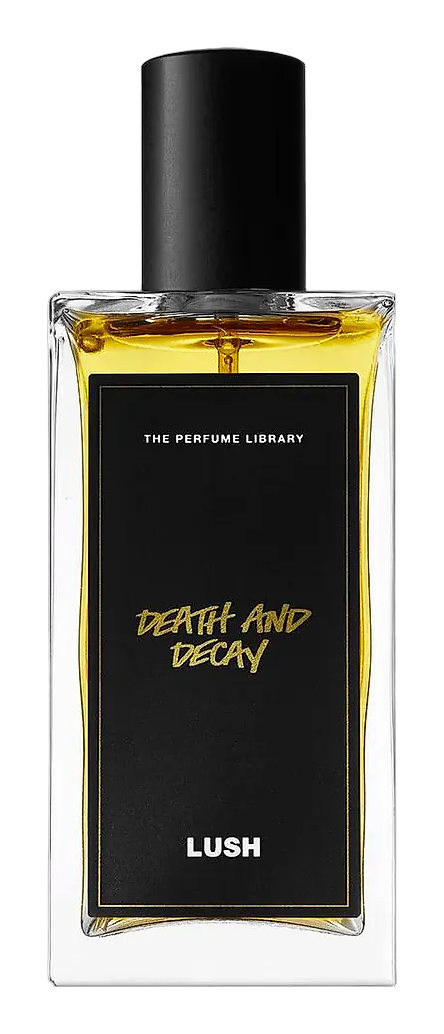
Death and Decay came from grief finding its own language. Mark Constantine lost his father, and in those weeks, lilies arrived in wreaths and bouquets, so many that they became a kind of atmosphere. The fragrance is a reconstruction of that specific floral presence: not the idea of lilies, but the lilies themselves, as they actually smelled in that room. Simon Constantine translated it, working with ylang-ylang, jasmine, and rose to build something heady and grounded at once, a white floral that understands it exists between beauty and its opposite.
The white floral heart is the entire point here, and Death and Decay builds it without apology. Ylang-ylang absolute is the dominant note, it brings both the tropical sweetness of the flower itself and a faint animalic warmth that keeps the composition from reading as purely pretty. Jasmine absolute amplifies the heady quality, while rose adds a quieter roundness that prevents everything from cloying. Tonka bean absolute is what makes it workable: a soft, powdery creaminess that balances the florals, keeping the fragrance from feeling like a funeral parlour and instead feeling like something a person might actually choose to wear.
The evolution
The opening is white florals, immediate. Ylang-ylang arrives quickly, asserting itself without being loud, followed almost concurrently by jasmine. There's a cool, waxy quality to the top, the smell of petals at their freshest, recently cut, still holding their structure. Not green, exactly. More like the scent of cut stems cooling in a dim room. This phase lingers for roughly 15 to 20 minutes before the heart notes begin their work. Rose emerges as the white florals soften, adding a roundness that feels warmer than expected. The combination of jasmine and ylang-ylang doesn't disappear, it settles, becomes intimate. Everything begins to smell like a full arrangement rather than individual flowers. Tonka bean arrives quietly, bringing its powdery creaminess at the edges, pushing the florals from cool to warm. The drydown is where the fragrance earns its name. The bright floral quality retreats but never fully disappears.
Cultural impact
Death and Decay occupies an unusual position in the niche fragrance landscape. Its name is a provocation, the kind of name that either draws you in or makes you hesitate. The fragrance itself earns its reputation through sincerity: the florals do smell like lilies at a funeral, but rendered with enough beauty and warmth that the experience is ultimately uplifting rather than morbid. Wearers describe it as the scent of someone who has made peace with wanting beautiful things, not someone who is in denial about mortality, but someone who uses beauty as a form of acceptance. Given its 2014 launch, it arrived during a period when niche perfumery was expanding rapidly and consumers were developing more adventurous palates.