The Story
Why it exists.
The beginning
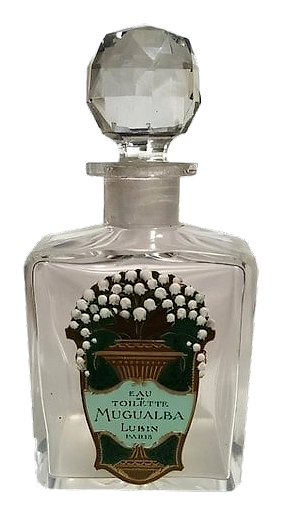
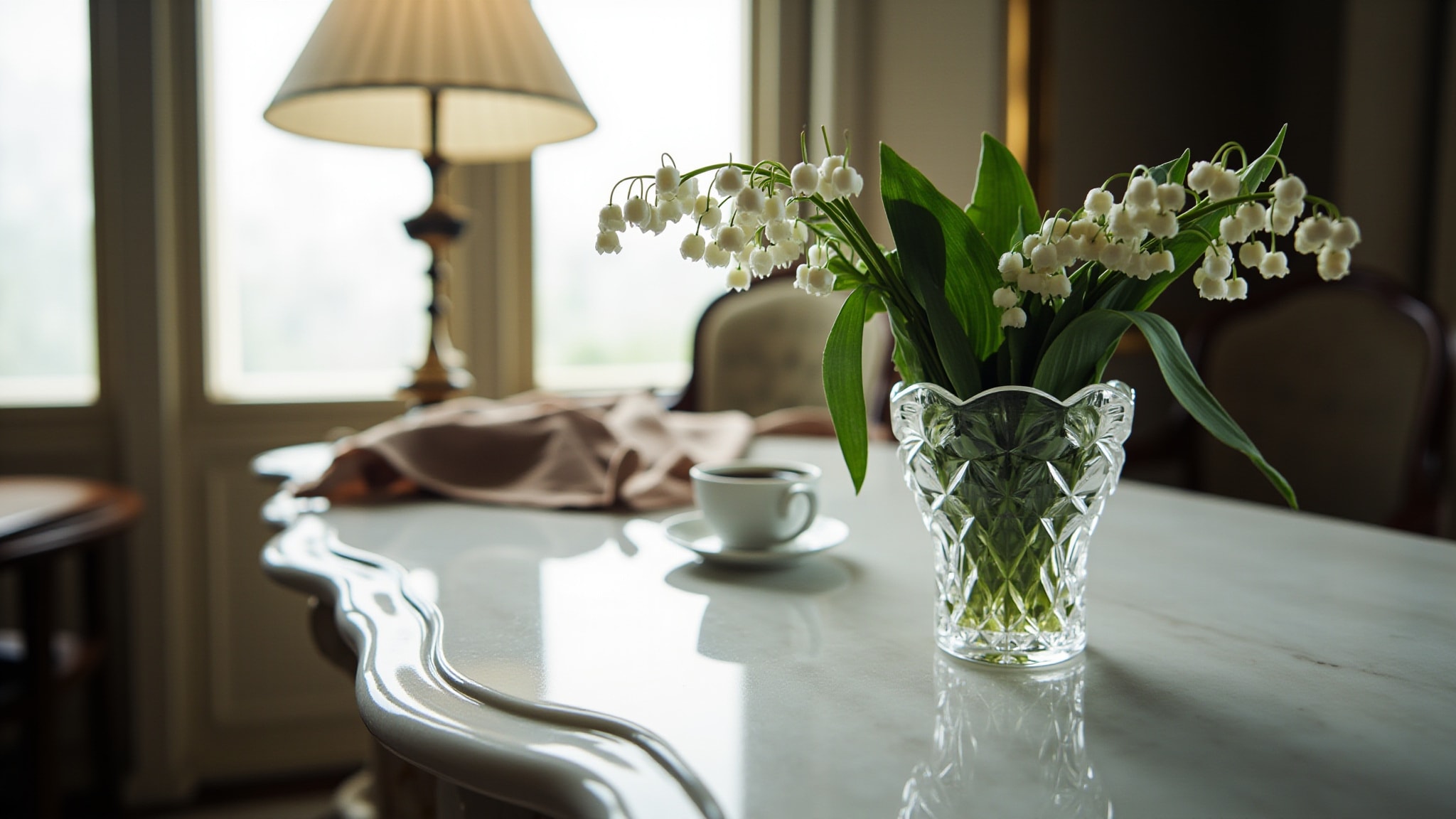
Mugualba arrived in 1914 from the house of Lubin, a Parisian perfumer often counted among the oldest perfume houses in the world. Lily of the valley, with its delicate green-and-white register, became one of the great floral obsessions of the early twentieth century, and Lubin built Mugualba around that single flower, framing it with a soft floral support and letting the muguet do the heavy lifting. The composition opens with that unmistakable cool green sweetness, the leafy freshness of crushed stems rising first, then settling into a creamy white floral heart that feels almost dewy, as though morning dew still clings to the petals. A quiet base of soft woods and clean musk smooths the drydown, keeping the muguet luminous rather than heavy.
What makes Mugualba interesting is its restraint. A muguet soliflore could be austere to the point of anonymity, but Lubin wrapped the central accord in a broader floral cushion that gives it body without smothering the green, slightly bitter, almost watery character of the flower itself. The composition belongs to an era when perfumers treated lily of the valley as a material to be shaped, not just a note to be named. That approach is rarer now. Mugualba reads as a document of how the flower was once handled, rather than a modern interpretation of it.
The evolution
On skin, Mugualba opens with a brisk, almost metallic cool, the lily of the valley presenting itself with the sharp-edged clarity of a flower cut at dawn. Within twenty minutes the green recedes slightly, replaced by a softer, more rounded white floral warmth, the supporting florals lending the composition a faint creaminess without ever tipping into sweetness. The drydown is where the restraint becomes the point: the lily softens into something faintly soapy, faintly powdery, and the whole thing settles into a clean, close-to-skin whisper that can last four to six hours depending on skin and weather. On fabric the next morning, a trace of green-white floral clings to scarves and collars, understated and oddly persistent.
Cultural impact
Mugualba sits at a curious crossroads in twentieth-century French perfumery, a 1914 lily of the valley composition that arrived just as the single-flower style was reaching its peak of refinement. It does not dominate popular memory the way Shalimar or No. 5 do, and you will rarely spot it in glossy magazine spreads or modern pop culture references. Instead, it occupies a quieter, more private corner of the fragrance world, the kind of perfume that old-school collectors and vintage enthusiasts recognize with a slow, appreciative nod. The scent itself reinforces that reputation.