
The Story
Why it exists.
The beginning
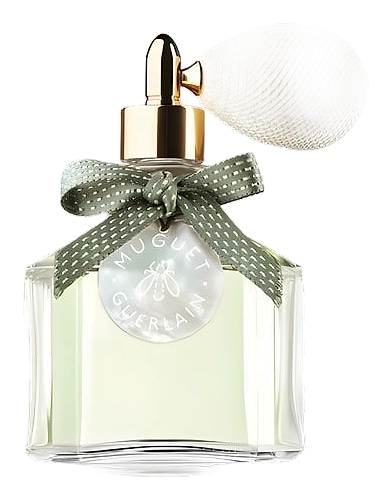
Muguet arrived in 1908, composed by Jacques Guerlain. The name is French for lily of the valley, a flower that grows wild in French woodlands and blooms for just two weeks each May, brief, inevitable, impossible to hold. Guerlain didn't try to extract the flower itself. That was the innovation. Instead, he composed an interpretation of what lily of the valley smells like on a particular kind of morning: green stems, cool air, the promise of white bells opening in damp grass. The 1908 formula became a house signature, reimagined, reconstructed, and finally reissued in 2009, but the original structure remains intact. The original flacon, a Belle Époque artifact with a distinctive green ribbon and white threads, still sits in the Hall of Mirrors at Guerlain's Champs Elysées headquarters. On request, visitors can smell the reconstructed extrait. The original scent, translated across a century.
The structural decision that defines Muguet is the repetition of its titular note across all three phases. Lily of the valley appears in the top, the heart, and the base, not as a cameo, but as a sustained presence that evolves as the other materials arrive and depart. This is unusual. Most fragrances introduce their lead note in the heart and let supporting materials frame it. Muguet opens with it, lives inside it, and ends with it. The challenge is that lily of the valley is nearly impossible to extract naturally. Guerlain worked with what was available in 1908, synthetic recreations of the green, dewy character that constitute what we recognize as muguet.
The evolution
The first minutes are lemon and green stems cutting through cool air. This is the sharpest phase, almost astringent, like cutting lily of the valley at the base and getting the sap on your fingers. Within twenty minutes, the lemon softens and the freesia arrives, sweet and slightly spicy, threading through the cream in the heart. The rose doesn't announce itself; it tempers everything without dominating. The ylang-ylang takes its time. It sits underneath for the first few hours, then slowly rises as the florals begin to thin. Around hour five or six, it becomes the dominant note, warm, tropical, a little exotic against the cool green opening. What remains after eight hours is a green-floral imprint with powdery undertones. Close to the skin. Intimate. Not a room fragrance, a skin fragrance that someone notices when they're standing near you.
Cultural impact
Muguet occupies a specific corner of perfumery history, the white floral executed with green restraint rather than powdery excess. The 1908 original sits in Guerlain's archives alongside their other foundational works. The original flacon, with its Belle Époque green ribbon and white threads, remains on display at the Champs Elysées house. It's a reference point for what lily of the valley can be when treated as a subject worth studying across time rather than a single impression to be captured.