
The Story
Why it exists.
The beginning
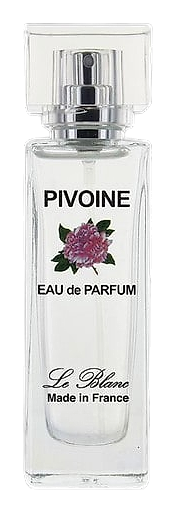
Pivoine centers on the peony, a flower that blooms briefly each spring and carries an almost weightless femininity in French perfumery. The composition leans into that transience: the dewy sharpness of peony itself, then a soft unfolding of petals and green leaves. Le Blanc treats the peony as a seasonal visitor worth celebrating before it fades. There's a freshness to the opening that reads less like a statement and more like a captured moment from a garden in late May, bottled before the petals drop. The fragrance lives in that narrow window where the flower is at its most expressive, just before it begins to wilt. Every note serves the peony rather than competing with it, which gives the composition its quiet confidence.
What makes Pivoine interesting is the tension between its freshness and its florals. The green sharpness keeps the peony from collapsing into pure sweetness, offering a clean contrast that prevents a white floral from becoming a wedding bouquet. Instead of stacking roses and heavy indolic flowers until the composition suffocates, Le Blanc builds around a single bloom and uses the supporting cast to define its shape. White musk in the base grounds the bouquet without darkening it, giving the fragrance a soft, almost soapy memory that lingers longer than expected.
The evolution
Pivoine opens with a cool rush. Peony hits first, almost like biting into a fruit that hasn't fully ripened, green and sharp and slightly floral at the same time. There's an underlying warmth that reads more like a suggestion than a declaration, the kind of soft radiance that lifts the peony without competing with it. Within 15 to 20 minutes, the heart takes over. The florals open fully, but not in a heavy, indolic way. They're clean, almost sheer, mixed with a green snap that recalls stems just snapped from the garden. The composition feels like walking through a garden after rain, everything wet and slightly blurred. After about two hours, the base settles in. White musk softens everything until the fragrance reads warm and close to the skin, wrapping the florals in a thin, clean layer rather than a heavy golden one.
Cultural impact
Pivoine arrives at a moment when peony-led fragrances have found a genuine following, a category that has grown steadily as buyers seek out florals that feel softer and less formal than the rose-dominated compositions that once defined French perfumery. The peony offers something different: a cooler, greener, more fleeting character that reads as modern without feeling trendy. Pivoine taps into that appetite with a focus that feels almost single-minded, treating the peony as the obvious center rather than burying it under layers of competing materials.