






Heritage
A house, in its own words
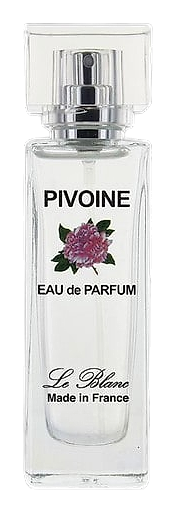
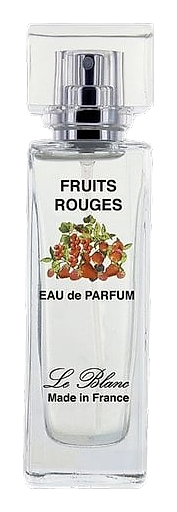
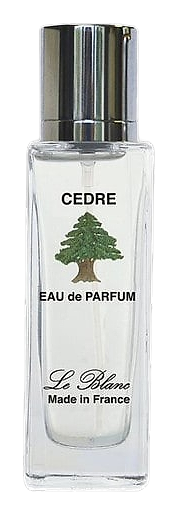
Le Blanc was established in 1994 in a part of northern France steeped in impressionist history, within reach of Claude Monet's house and gardens at Giverny. The company's founding coincided with a broader revival of interest in regional French craft houses, and its location placed it at the intersection of two distinct Provençal and Norman cultural spheres: the artistic heritage of the Seine Valley and the raw material expertise of Grasse, the Provençal town long regarded as the historic capital of French perfumery. From its first years, the maison oriented itself toward a restrained, single-note aesthetic rather than the complex constructions that dominated late twentieth century fine fragrance. The catalog grew organically around a palette of recognizable materials, lavender from the south of France, rose, jasmine, muguet, and powder notes, each developed as a distinct composition rather than as part of a numbered pyramid. In contrast to French houses such as Houbigant (operating since 1775) or Guerlain (founded in 1828 by Pierre-François-Pascal Guerlain on the Rue de Rivoli in Paris), Le Blanc is a comparatively young maison. Its short history has allowed it to operate without the weight of centuries of accumulated archive, and its identity has formed primarily around material and place rather than dynastic narrative. The imprint of Giverny, the visual landscape of Monet's water lilies, and the olfactory traditions of Grasse together form the two anchoring references of the brand's heritage. Le Blanc approaches perfumery as an exercise in clarity, taking a single dominant material, floral, powdery, or woody, and allowing it to speak at full volume rather than burying it beneath accords. The maison's name points toward the white-floral, powdery family of scents (muguet, jasmin, poudre de riz, pivoine) that runs through much of its line, and the catalog reflects a coherent editorial point of view built around softness, luminosity, and recognizability. This philosophy stands in deliberate contrast to the baroque construction that characterized much of late twentieth century French perfumery, where complex pyramids and high-impact sillage were standard. Le Blanc instead invests in the quality of its raw materials, trusting the materials themselves to carry the composition. The decision to anchor each fragrance in a single, plainly named botanical (Lavande, Rose, Orchidée, Vanille, Ambre, Patchouly) signals a confidence in the raw material and a desire to make each scent immediately legible. The result is a body of work that functions as an introductory course in French floral and powder perfumery, with each bottle presenting a clear, relatively direct reading of its central note. For wearers, that translates into scents that read from the moment they are applied, without requiring patience or interpretation.