







Heritage
A house, in its own words
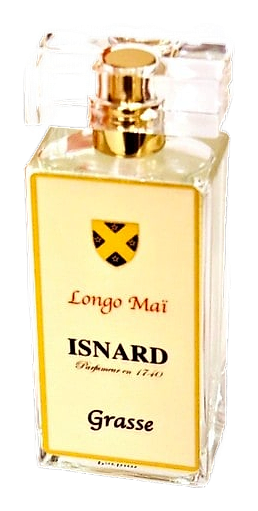
The Isnard family's involvement in Grasse perfumery began during the town's nineteenth-century boom, when raw materials for tanneries, glove-making, and eventually fine fragrance transformed the local economy. Antoine Isnard, a perfumery merchant, founded the original Isnard family enterprise, establishing the commercial foundations that would carry the name through subsequent generations. A separate branch of the family, Léopold Isnard, husband of Madame Maubert, created the « Isnard-Maubert » perfume factory in 1826. Period bottles bearing the company label and surviving equipment pieces still document this early industrial activity, offering a tangible link to the era when Grasse solidified its reputation as the beating heart of French perfumery. Through the twentieth century, the house adapted alongside the industry's shift from artisan workshops to larger-scale production while preserving methods passed down within the family. This continuity has allowed the brand to maintain a working knowledge of techniques, formulations, and regional ingredient networks that many contemporary houses have lost. The modern catalog reflects this layered history, with fragrances that nod to Provençal culture and Occitan language while remaining accessible to international audiences. The family's continued presence in Grasse, now a UNESCO-recognized territory for perfume-related heritage skills, situates Isnard within a small circle of houses able to claim generational continuity in the craft. Isnard approaches perfumery as a continuation of Grasse's artisan tradition rather than a reinvention of it. The house draws heavily on the Provençal landscape, its plant life, and its linguistic heritage, naming fragrances after regional concepts and dialect words. This grounding in place gives the collection a coherent identity: each composition reads as a portrait of the South of France rather than an abstract exercise in trend-driven composition. The creative vision leans toward authenticity over novelty. Rather than chasing shifting market preferences, the house maintains a consistent palette shaped by locally sourced florals, herbs, and aromatic materials. Fragrance names like Pitchoune (a Provençal term of endearment), Troubadour (evoking the region's medieval poetic tradition), and Esperida speak to a storytelling sensibility rooted in Occitan culture. The house values continuity with the past, positioning itself as a custodian of Provençal olfactory vocabulary rather than a disruptor of it.