The Story
Why it exists.
The beginning
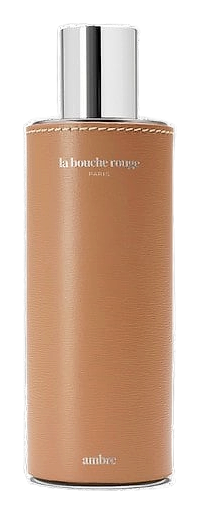
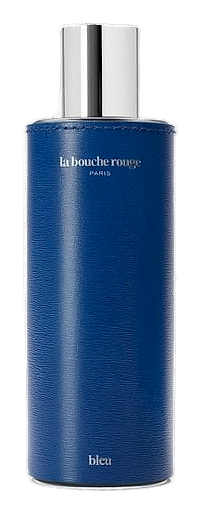
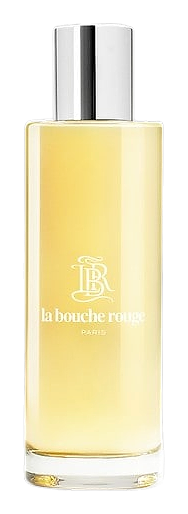
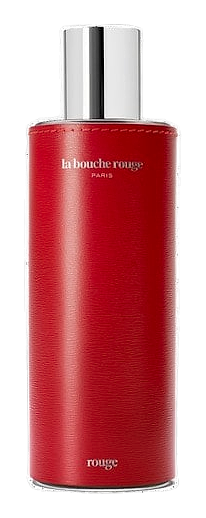
Rouge joined a lineup at La Bouche Rouge that already included Rose, Nude, Ambre, and Bleu, a collection where each name signals intention. The house had been making its mark with refillable cosmetics before turning toward perfume, and Rouge was the assertive one from the start, a Chypre Floral built around contrast rather than harmony. The perfumer behind it is Dora Baghriche, a nose whose work has a reputation for pulling warmth out of unexpected materials. The brief seems clear: take the rose, the most storied flower in French perfumery, and make it less polite. The name signals the intention. Rouge doesn't whisper. It leans in.
What makes Rouge structurally interesting is how the rose sits between two force fields. Pink pepper and ginger bring lift and bite at the top, sharp enough to cut the floral's softness before it fully forms. Benzoin enters at the heart, sweet and slightly medicinal, anchoring the rose instead of letting it float. Then the base pulls the whole structure downward with patchouli, oud, vanilla, vetiver, and cedar, a combination that reads more as dark wood and root than as sweetness. The result is a rose composition that never settles into the expected register.
The evolution
The first hour is where Rouge announces itself. Pink pepper lands first, dry and biting, followed almost immediately by ginger's clean heat. There's nothing gentle about this opening. The rose enters within the first 10 to 15 minutes, and the benzoin wraps around it like a slow exhale. By the 30-minute mark, the ginger has mellowed but hasn't disappeared entirely. It lingers in the background like a memory of something sharp. The rose dominates from the 1-hour mark through the next 2 to 3 hours, richer and slightly powdery now, with the benzoin's sweetness threading through it. Then the base takes over. Patchouli and oud rise quietly, not as a dramatic shift but as a deepening. The vanilla arrives last, soft and warm, smoothing the edges of the oud without softening its character.
Cultural impact
Rouge fits within a small but deliberate category: rose-and-oud compositions where neither ingredient dominates. It wears closer to the skin than powerhouse orientals, making it better suited to close quarters than grand entrances. The spice-led opening sets the tone for everything that follows, a forward, almost confrontational brightness that settles into something denser and more contemplative as the hours pass. Compared to heavier rose-oud blends, Rouge's lighter projection and resinous sweetness keep it wearable across seasons, though the base leans decidedly cold-weather.
The House
La Bouche RougeLa Bouche Rouge is a Paris-based fragrance and cosmetics house founded in 2017 by Nicolas Gerlier, a former executive at L'Oréal. The brand built its reputation on refillable lipstick formulations housed in leather cases before expanding into fine fragrance around 2020. What distinguishes La Bouche Rouge from conventional fragrance houses is its unwavering commitment to eliminating petrochemical derivatives and microplastics from every formula. The house produces its perfumes in France using what it describes as upcycled and natural ingredients, pairing these formulations with refillable glass bottles. In 2023, the brand released a collection of extrait浓度 fragrances including Capri Lumière Jaune, Nude, Rose, Bleu, and Rouge. La Bouche Rouge was acquired by Beauty Brands Global, which also counts fragrance houses like Bond No. 9 New York and Amouage among its portfolio.
The Creator
Dora Baghriche-ArnaudMediterranean roots and French training give Baghriche's work a distinctive clarity. She favors ingredients with strong character and provenance, often selecting materials that carry cultural memory.