The Story
Why it exists.
The beginning
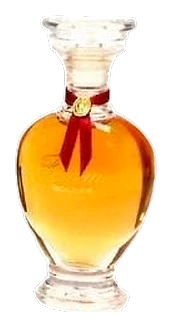
Rêve d'Or arrived in 1889, a moment when French perfumery was reaching for something beyond the simple colognes that had dominated the previous century. The brief was elegant but ambitious: a fragrance that could hold its own in the salons of Paris without announcing itself. The composition paired geranium, green, camphorated, assertive, with orange blossom's bitter-floral clarity. Vetiver brought mineral earth. Tea rose provided the romantic anchor. The result was neither purely floral nor purely woody, but something more interesting: a fragrance that breathed.
What makes Rêve d'Or's structure unusual is the restraint. Six materials. That's it. Geranium, orange blossom, vetiver, tea rose, heliotrope, sandalwood. No overwhelming aldehydes, no aggressive oriental base, no sillage monster. Instead, the composition trusts that warmth and intimacy will outlast projection. Heliotrope, with its almond-cream character, bridges the gap between the florals above and the sandalwood below, creating a smooth transition that keeps the fragrance cohesive across its lifespan. Sandalwood doesn't dominate the drydown; it softens it. The geranium's green edge persists longest, threading through like a memory you can't quite place.
The evolution
Rêve d'Or opens sharp. Not aggressive, but present, geranium's camphorated greenness cuts through orange blossom's sweetness like a window thrown open in a dusty room. Vetiver adds mineral earth. Tea rose arrives quietly, not performing, just there. The citrus fades faster than expected; this isn't a fragrance that announces itself at the top and collapses. The heart arrives gradually. Heliotrope's almond-cream softness takes over as the green notes soften, and the rose deepens slightly, becoming warmer, less bright. It reads as a different fragrance for about an hour, softer, more intimate. Then the base arrives. Sandalwood's woody-cream character emerges, and the heliotrope shifts from almond to something warmer, closer. The geranium doesn't disappear entirely, it lingers as a green undertone for another hour, keeping the drydown from becoming purely sweet. The final stage is a close, quiet warmth: heliotrope and sandalwood, skin-close, intimate. On most skin types, expect above-average longevity, this one holds. Not projecting, but present.
Cultural impact
Rêve d'Or occupies an unusual position: a fragrance from 1889 that still holds up against modern compositions. Collectors who seek out L.T. Piver tend to value exactly this, formulas that haven't been updated beyond modern safety standards, preserving something that feels timeless rather than nostalgic. Wearers describe it as the scent of someone who walks into a room and doesn't need to announce themselves. The powder-rose character has drawn comparisons to other refined florals, though the consensus leans toward its distinctly French sensibility.