
The Story
Why it exists.
The beginning
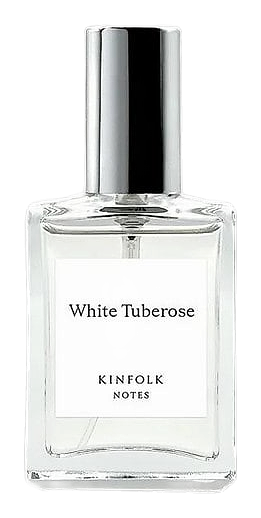
White Tuberose draws its breath from Virginia Woolf's To the Lighthouse, translating that precise moment into something wearable. The fragrance captures the dusk when white florals release their richest perfume and turns it into scent rather than image. It sits within the kind of composition that asks you to slow down and notice what the air is doing. The brief here is not opulence. It's the sensory equivalent of sitting by a window as the light drains from a room, and the bottle on the desk holds that hush. There is a narcotic creaminess at the center, the unmistakable buttery weight of tuberose absolute paired with coconut notes that lend a soft, milky roundness.
What makes this composition quietly interesting is its refusal to overplay the tuberose. Most tuberose-led fragrances lean narcotic, heavy, almost carnal. White Tuberose does the opposite. It pairs the bloom with lily of the valley and jasmine, two white florals known for their cooler, greener facets, and lets a modest citrus opening set the airiness before the florals even arrive. The result is a tuberose that reads luminous rather than lush. The amber and musk in the base anchor the composition without tipping it into sweetness.
The evolution
The first ten minutes belong to the citrus, a quick, clean lift that feels almost like peeling a lemon rind over a vase. By the twenty-minute mark the florals take over and the fragrance finds its center. Tuberose leads, but it's the bright, green-edged variety, more stem than petal, with jasmine threading through like a current and muguet adding a cool, almost watery softness. The creaminess that tuberose is famous for shows up, but gently, like warmth arriving at the edges rather than flooding in. Two hours in, the florals begin to recede and the base steps forward. Musk dominates the drydown, soft and slightly powdery, with amber giving it a faint golden warmth underneath. The scent sits close to skin from the four-hour mark onward, leaving a trail that registers more as a feeling than a statement. On fabric the next morning, traces of the floral heart linger, ghostlike, over the warm amber base.
Cultural impact
White Tuberose sits at a crossroads that few florals attempt. Tuberose is a flower that carries enormous cultural freight: heady, almost edible in its sweetness, famously used in traditional Indian perfumery as genda phool oil, pressed into attars and temple garlands where its lactonic density is treated as sacred and indulgent in equal measure. The compound indole, present in high concentrations in natural tuberose absolute, is what gives the bloom its carnal, almost animal quality, the scent of flesh and pollen and ripe fruit, all of it wrapped in cream.