The Story
Why it exists.
The beginning
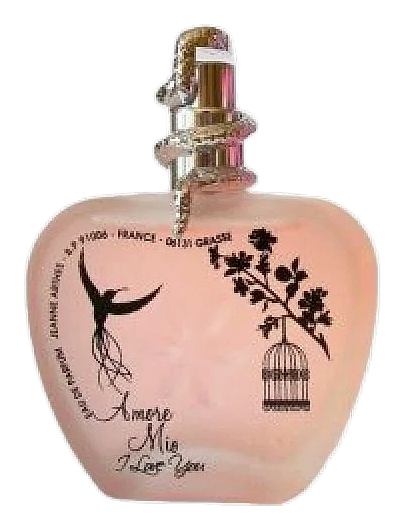
The Amore Mio collection carries its Italian with a French accent, a wink at romance rather than a postcard from it. Amore Mio I Love You arrived in 2012 as the most declarative entry in the line, named with the directness of someone who has already made up their mind. Jeanne Arthes built the Amore Mio range around the idea that love doesn't need translation, and this edition pushed that conviction further: no qualifiers, no question marks. Just the statement, and the scent to match it.
What makes this composition work is how it earns that confidence without trying too hard. The top notes arrive in a rush, pear and grapefruit with a flicker of pink pepper that doesn't linger long enough to complicate things. The heart is where the fragrance justifies its name: rose and peony in a ratio that reads as floral but refuses to go precious. Geranium adds a quiet green undertone that keeps the florals from tipping into something overly sweet. The base is where it settles into its actual character: musk, vanilla, and tonka bean that dry down soft and powdery, intimate rather than loud.
The evolution
The first spray hits like a question that answers itself. Pear and grapefruit arrive bright, almost startled, with a pink pepper flick that doesn't wait around. Within minutes the florals move in, rose and peony settling in softly, geranium adding a quiet green counterpoint that keeps everything from going too sweet. By the second hour the opening has already handed off to the heart, and the fragrance begins its slow turn toward warmth. The drydown is where it lives now: musk and vanilla wrapped in tonka bean, a soft powdery warmth that stays close to the skin. Six to eight hours on most, eventually fading to a whisper rather than a statement. This is a fragrance that starts as a declaration and ends as a memory.
Cultural impact
Launched in 2012, Amore Mio I Love You represents Jeanne Arthes at its most straightforwardly romantic, fruity, floral, and sweet without hedging. The 2012 fragrance landscape was crowded with fruity-floral compositions targeting the same audience, but Jeanne Arthes positioned this one as an accessible French option rather than a luxury statement. Moderate sillage makes it a practical choice for office and intimate settings, sitting comfortably in the daytime-casual register rather than pushing toward evening or dramatic projection.