
The Story
Why it exists.
The beginning
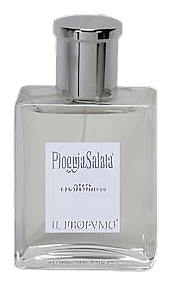
Pioggia Salata translates to "salty rain", the kind that falls over coastal cliffs when the sea and sky blur together. Released in 2009 by Il Profvmo, the Italian niche house founded by Silvana Casoli, the fragrance was built to interrogate what an aquatic could actually smell like. Not ozonic accords and calone. Real mineral weight. The smell of something living. Casoli had spent years studying how skin interacts with salt and marine materials. She knew that most aquatics bypassed the body entirely, they projected outward and vanished. Pioggia Salata was designed to do the opposite: start on skin, stay on skin, change on skin. The brief was simple. The execution was anything but.
The note structure is built around a paradox: salt as both the backbone and the softener. Three types of salt anchor the heart, but they don't amplify, they carry. Hibiscus, ylang-ylang, and pink nerium oleander bloom through the mineral base rather than sitting on top of it, which is unusual. Most aquatics treat florals as decoration. Here, they're the point. The inclusion of eucalyptus in the base is the move of someone who understands that marine notes need something to push against. Eucalyptus is camphorated, slightly medicinal, not a comfortable pairing at first glance. But against salt and lily, it gives the drydown its strange, compelling edge. The palm wood stops it from going sharp.
The evolution
The opening hits mineral-first. Violet leaf gives it a green, dewy quality while the seaweed arrives already wet, not the sharp iodine character you'd expect, but something deeper, more grounded. Like walking into a rock pool with bare feet. The salt takes over within minutes and dominates for the next hour or two. You stop noticing it as a note and start noticing it as a texture, the medium everything else moves through. The florals arrive gradually: hibiscus tropical and slightly syrupy, ylang-ylang creamy with a faint spice underneath, pink oleander adding a wilder, almost herbal edge that keeps the sweetness honest. The eucalyptus announces itself around the two-hour mark, adding a camphorated cool that shifts the composition's register. By the fourth hour, the palm wood emerges as the anchor, warm, dry, faintly woody. The eucalyptus and lily linger closest to the skin. The lily eventually wins out, carrying the drydown into something powdery and mineral-sweet that stays close and quiet for another few hours.
Cultural impact
Released in 2009 during the peak of aquatic popularity, Pioggia Salata arrived as a counter-argument. While most marine fragrances of that era leaned on synthetic ozonic molecules for their water effect, this one grounded itself in real mineral materials, salt, seaweed, eucalyptus, and let the florals do the emotional work. Wearers describe it as the scent of someone who went in the water and didn't rush to shower afterward. Moderate sillage means it doesn't announce itself across a room; it reveals itself to someone standing close. The composition has earned a quiet loyalty among those who've found it, and keeps them searching for what comes next.