The Story
Why it exists.
The beginning
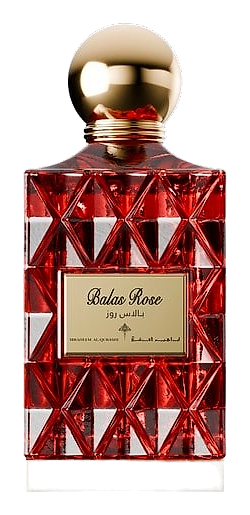
Balas Rose takes its name from the balas ruby, gem of gems, reserved for royalty. The Ibraheem AlQurashi house built its reputation over nearly a century of blending Arabian perfumery traditions with ingredients that demand attention. This fragrance exists because someone decided that the world's most precious rose deserved an setting to match. Saffron from the east, Bulgarian rose absolute, and a suede heart that reads as leather-warmth rather than powder. The result is a composition that announces itself without shouting, opulent enough for a royal hall, close enough to wear every day.
What makes Balas Rose unusual is the way it handles its heart. Most rose fragrances lean into the florals, jasmine, peony, more rose. Here, suede steps in and softens the white florals into something warmer, almost textile. Vanilla doesn't sweeten the composition so much as round it. The result is a heart that feels inhabited rather than constructed. The base then does what Arabian perfumery does best: it holds. Cedarwood and birch provide dry, slightly smoky woodiness while musk keeps everything skin-close and present for hours after the opening has settled.
The evolution
Balas Rose opens with intent. The saffron arrives first, metallic, almost medicinal in its intensity, followed immediately by rose and a raspberry note that adds a bright, slightly tart counterpoint. For the first twenty minutes, this is a fragrance that announces itself. Then the suede arrives. It doesn't overpower the florals, it softens them, absorbs the sweetness, turns jasmine and vanilla into something that reads as warmth rather than florals. The rose doesn't disappear. It deepens. Settles into the composition like a foundation rather than a feature. By the third hour, cedarwood and birch have taken over. The drydown is dry, quiet, and stays close to the skin. On fabric, it lasts longer, somewhere between a full workday and the next morning. On skin, the musk fades last, intimate and present at the eight-hour mark on most wearers.
Cultural impact
Balas Rose occupies an interesting space in the landscape of accessible luxury florals. Wearers consistently describe it as the scent of someone who walks into a room and doesn't need to announce themselves. The comparison to Baccarat Rouge 540 comes up often, not because they smell identical, but because they share an energy: opulent, warm, and confidently sweet. What Balas Rose offers that its more famous counterpart does not is the suede heart, which tempers the sweetness into something more wearable for everyday use. The fragrance has developed a small cult following among collectors who appreciate Arabian perfumery but want something less oud-forward than the category typically delivers.